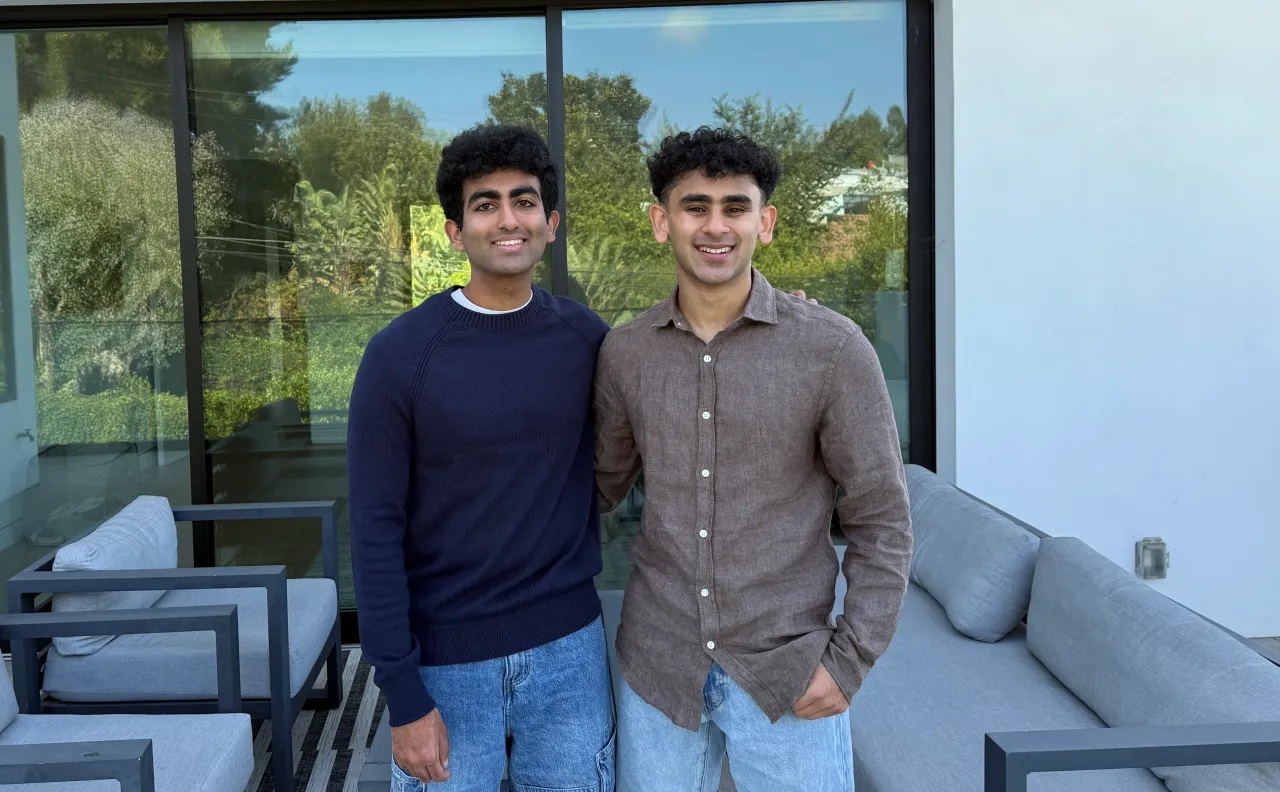
A pair of 20-year-old college dropouts, Rudy Arora and Sarthak Dhawan, have launched an AI-powered notetaking and study-assistant app called Turbo AI (formerly TurboLearn) that has grown to 5 million users in less than two years and achieved “eight-figure” annual recurring revenue, according to multiple reports. (TechCrunch)
The startup, founded in early 2024, reportedly onboarded about one million users at first, then jumped to five million in the past six months, with about 20,000 new users signing up daily. (TechCrunch)
Turbo AI addresses a common classroom problem: trying to take notes while listening to a lecture. Dhawan said: “Every time I tried to take notes, I’d stop paying attention… what if I could use AI?” (IndexBox) The product enables users to upload lecture audio, PDFs or videos, then generate notes, flashcards, quizzes and summaries interactively. It has since expanded usage beyond students to professionals (lawyers, doctors, consultants) who use it to summarise reports and even convert documents into podcast-style audio. (TechCrunch)
The founders emphasise that Turbo AI remains profitable and has intentionally taken only about US$750,000 in seed funding, choosing growth and revenue over raising large rounds. (AIM Media House)
From an initial student-focused tool, Turbo AI has rebranded to reflect broader use cases and is now used by institutions including Harvard University, Massachusetts Institute of Technology (MIT), and global consultancies such as Goldman Sachs and McKinsey & Company. (StreetInsider.com)
Why it matters:
This is an example of how a simple, widely-felt pain point (note taking + attention) can scale rapidly when solved via AI and distribution strategy.
The growth suggests large demand in both education and professional sectors for tools that go beyond passive transcription to active learning (flashcards/quiz) and knowledge workflows.
The fact that the startup is profitable and backed by a small seed suggests a lean-growth model rather than heavy VC spending, which may appeal to founders wary of over-raising.
It reflects how AI applications can leapfrog traditional tools: Turbo AI sits between manual note methods (Google Docs, pen & paper) and fully automated transcript services, by combining automation + interactive learning.
Challenges & open questions:
While the user count is impressive, the actual revenue per user, margins (especially given AI compute costs) and churn rates are not disclosed in full detail.
The educational market is competitive (other AI note-takers exist) and scaling into professional enterprise workflows may demand additional features, integrations and support.
Data privacy and content ownership could become significant issues, especially as users upload audio/video/lectures – regulation, compliance and user trust matter.
Sustainability of growth: rising users may raise compute/infrastructure costs; maintaining profitability at scale will be a key test.