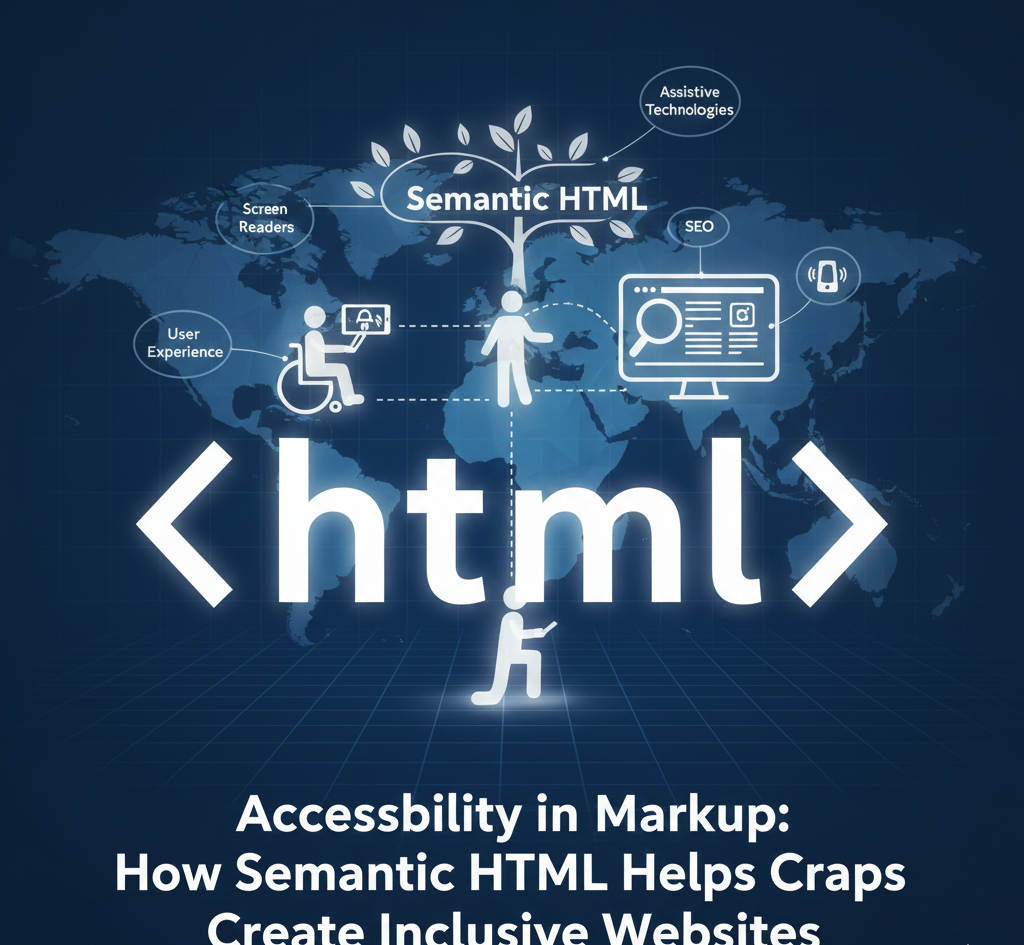
Accessibility begins with HTML, not JavaScript or ARIA attributes.
Semantic HTML plays a major role in web accessibility. Assistive technologies rely on meaningful markup to guide users through content.
It communicates meaning to assistive technologies such as screen readers and keyboard navigation tools. Using proper elements ensures content is usable by people with disabilities.
Accessible markup:
- Improves SEO
- Enhances usability for all users
- Reduces legal and compliance risks
- Encourages cleaner architecture
Replacing clickable <div> elements with proper <button> or <a> elements is a small change with massive impact.
Accessibility is not a feature, it’s a standard.