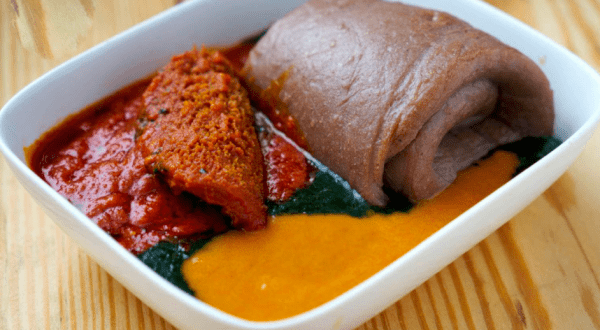
Among the rich culinary traditions of the Oyo people of Southwestern Nigeria, Amala paired with Ewedu soup stands out as a quintessential staple, celebrated for its unique taste, nutritional value, and cultural significance.
Amala, often made from yam flour (elubo) or cassava flour, is renowned for its smooth, stretchy texture and deep brown hue. It is typically served hot and forms the perfect base for various soups. Ewedu, a green, leafy soup made from jute leaves, complements Amala beautifully, offering a slippery texture and a mild, earthy flavor that balances the starchy Amala.
Traditionally, the Oyo people serve this duo with Gbegiri soup (bean paste) and assorted proteins such as meat, fish, or chicken, creating a harmonious blend of flavors. The combination is not just a culinary delight but also a symbol of cultural identity, often featured during festivals, family gatherings, and special occasions.
Nutritionists note that this meal is highly balanced, with Ewedu providing essential vitamins and minerals, while Amala offers complex carbohydrates for sustained energy. The preparation techniques, passed down through generations, highlight the Oyo people’s culinary ingenuity and heritage.
Food enthusiasts across Nigeria and the diaspora continue to celebrate Amala and Ewedu as one of the nation’s most iconic traditional dishes, embodying both flavor and cultural pride.
Sources
Naija Foodie — traditional Oyo recipes and cultural insights
The Guardian Nigeria (Food Section) — history and preparation of Amala and Ewedu
Pulse Nigeria — nutritional and cultural significance
BellaNaija Lifestyle — contemporary popularity and diaspora appreciation