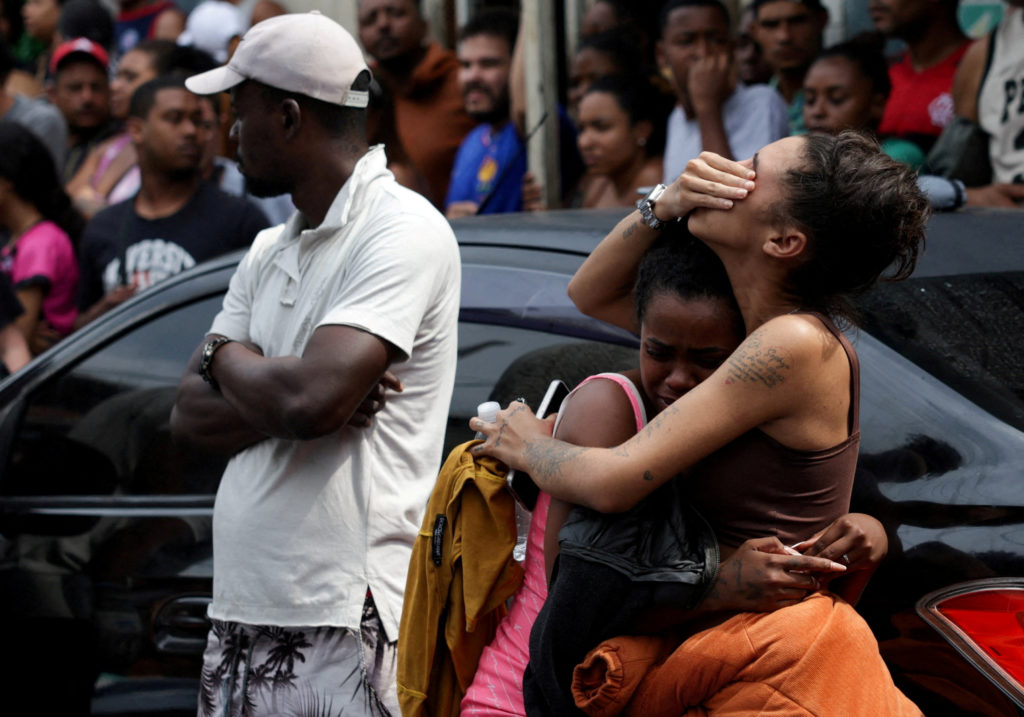
In the suburbs of Rio de Janeiro, Brazil’s largest-ever police operation left a horrific scene: more than a hundred people killed, dozens of bodies laid out on a street, and mounting scrutiny from human rights groups. (Reuters)
What happened
A massive raid earlier this week, involving around 2,500 police and military personnel, targeted the powerful gang Comando Vermelho (“Red Command”) in the favela complexes of Complexo do Alemão and Penha on Rio’s northern fringes. (Al Jazeera) Reports indicate the operation was pre-planned over two months, with authorities attempting to trap suspects in forested terrain behind the communities. (The Times of India)
By early Wednesday, residents had collected bodies from the area and laid more than 70 corpses in a long row along São Lucas Square in Penha — some covered with sheets or bags, others stripped to their underwear in order for families to identify them. (RTL Today)
Death-Toll and official figures
State police confirmed at least 119 deaths, including four police officers. (ABC News) However, the public defender’s office in Rio put the toll at 132 deaths, citing bodies still being processed. (News24)
Authorities also reported arresting 113 suspects and seizing over 118 firearms during the operation. (Reuters)
Response and reaction
Governor Cláudio Castro described the action as a fight against “narco-terrorism” and asserted those killed were criminals who resisted police action. (Fiji Broadcasting Corporation)
In contrast, the United Nations Office of the High Commissioner for Human Rights (OHCHR) and other rights organisations condemned the scale of the killings and demanded an independent investigation into possible summary executions and excessive use of force. (Fiji Broadcasting Corporation)
Why it matters
The operation marks Brazil’s deadliest police raid in recent history—surpassing the 1992 Carandiru prison massacre and the 2021 Jacarezinho favela raid. (Reuters) It highlights deep-seated issues in Rio’s handling of drug gangs, violence in the favelas, and policing methods in marginalised communities.
The visuals of bodies lining a busy favela street have triggered public outrage and raised questions about human rights, accountability and the post-raid path. For many residents, the catastrophe deepens fear, trauma and mistrust of state institutions.