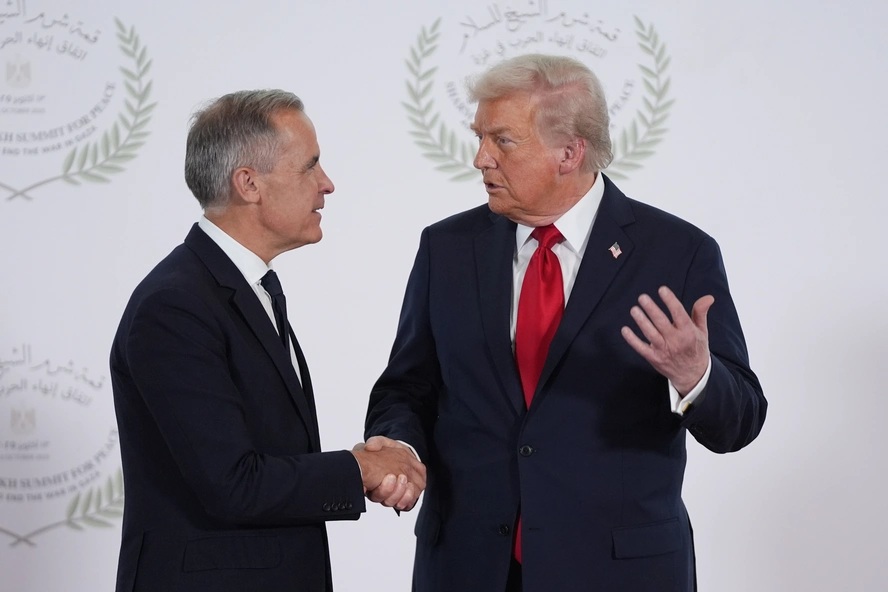
In a dramatic escalation of trade tensions, U.S. President Donald Trump announced late Thursday that he is terminating all trade negotiations with Canada, citing a television advertisement released by the Canadian province of Ontario that he labelled “fraudulent”. (Politico)
According to multiple reports, the ad used audio and video excerpts of former U.S. President Ronald Reagan, purporting to show Reagan opposing tariffs. The Ronald Reagan Presidential Foundation issued a statement claiming the footage was edited without permission and misrepresented Reagan’s original 1987 radio address. (Al Jazeera)
On his social-media platform, Trump wrote:
“TARIFFS ARE VERY IMPORTANT TO THE NATIONAL SECURITY, AND ECONOMY, OF THE U.S.A. … Based on their egregious behavior, ALL TRADE NEGOTIATIONS WITH CANADA ARE HEREBY TERMINATED.” (Reuters)
The move follows a series of disputes: earlier this year the U.S. imposed or threatened high tariffs on Canadian steel, aluminum and autos. Canadian Premier Doug Ford of Ontario acknowledged that his province’s ad campaign may have triggered the president’s ire. (Politico)
Canadian Prime Minister Mark Carney stated that Canada will not allow unfair access to its markets if talks break down. The timing raises questions about the future of the United States–Mexico–Canada Agreement (USMCA) review due in 2026. (Reuters)
Why it matters:
Trade implications: Canada is one of the U.S.’s largest trading partners. The immediate cessation of negotiations introduces significant uncertainty for businesses dependent on bilateral supply chains. (Al Jazeera)
Political signalling: Trump’s framing — tying national security and economy to tariffs and trade — indicates a hard-line posture that may shift U.S.–Canada relations from collaborative to adversarial.
Precedent for future disputes: The trigger here was a media campaign and intellectual-property overlay, not purely economic policy; it suggests trade talks may increasingly reflect political, cultural and media-driven flashpoints.
Domestic and international ripple: For Canada, a breakdown could force re-orientation of trade partnerships. For U.S. exporters and multinationals, sudden policy reversal increases risk.
USMCA stakes: With the 2026 review looming, this disruption raises questions about whether the framework will survive intact or be renegotiated under strain.
Challenges & open questions:
It remains unclear what specific trade talks were terminated — whether the full spectrum of bilateral talks or certain sectoral negotiations.
Canada’s response remains cautious; no immediate counters were announced beyond restating intention to negotiate in Canadians’ best interest.
Whether this is a negotiation tactic (to extract concessions) or a sustained policy shift remains to be seen. Historical precedents show prior U.S.–Canada trade disruptions eventually resolved via compromise.
The effect on businesses and markets, especially in steel, autos, and digital services, could build over months if uncertainty persists.