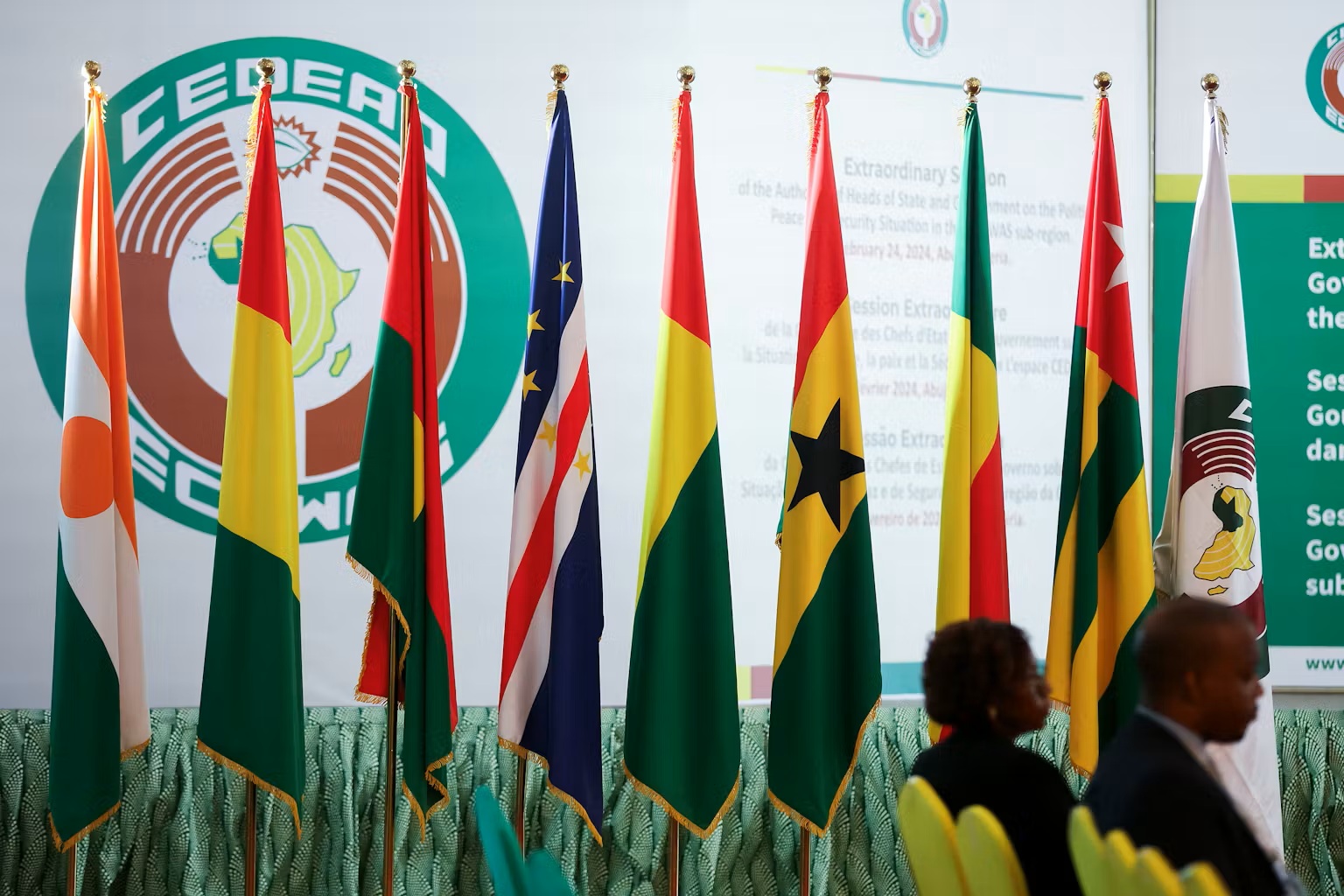
ECOWAS leaders have raised grave concerns about the growing wave of terrorist attacks across West Africa, warning that the crisis has reached a level that threatens the very existence of states in the region.
Speaking at a high-level security summit, ECOWAS officials noted that extremist groups have expanded their operations beyond the Sahel, penetrating coastal countries and destabilizing communities. The bloc described terrorism as the biggest challenge to peace, security, and development in West Africa today.
Key points highlighted by ECOWAS include:
Expansion of terror networks from Mali, Burkina Faso, and Niger into coastal states such as Benin, Togo, and Côte d’Ivoire.
Mass displacement of civilians, with millions forced to flee their homes due to violence.
Economic disruption, as insecurity hampers trade, agriculture, and investment.
Weakening of state authority, with terrorists exploiting porous borders and fragile governance structures.
ECOWAS warned that unless urgent collective action is taken, terrorism could undermine the region’s democratic institutions and economic integration efforts. The bloc called for:
Stronger regional military cooperation to confront extremist groups.
Enhanced intelligence sharing among member states.
Increased investment in youth employment and education, to reduce recruitment into extremist movements.
International support, particularly from the African Union, United Nations, and global partners.
The statement comes amid a surge in attacks in northern Nigeria, Mali, and Burkina Faso, where militants linked to al-Qaeda and ISIS affiliates continue to expand their influence.
Analysts say ECOWAS’s warning reflects the urgency of the crisis, as terrorism increasingly threatens not just security but the existence of nation-states in West Africa.