Grammarly, the popular AI-powered writing assistant, has officially rebranded as Superhuman, signaling a bold transformation from a grammar correction tool into a full-fledged AI productivity platform.
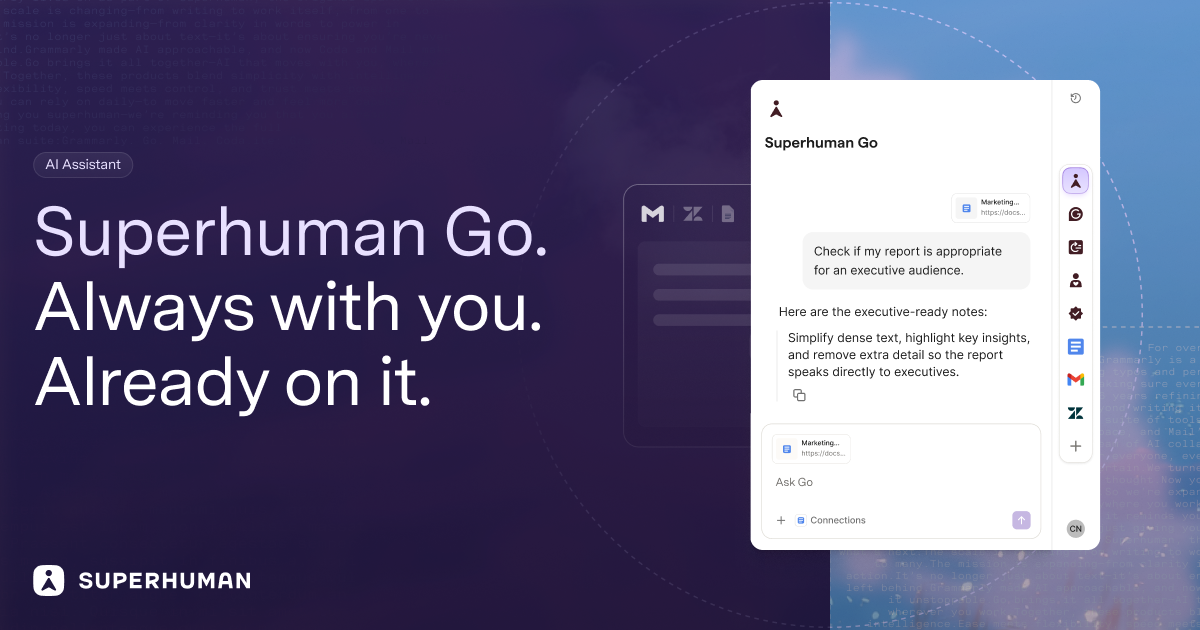
The rebrand introduces Superhuman Go, a proactive AI assistant designed to streamline everyday work across writing, email, meetings, and collaboration. The platform now integrates with over 100 third-party apps including Google Workspace, Outlook, Jira, and Confluence.
According to the company, Superhuman Go aims to “meet users where they work,” offering intelligent support that goes beyond grammar checks to include drafting messages, summarizing documents, and scheduling tasks.
“We’re moving from fixing your writing to empowering your productivity,” said Rahul Roy-Chowdhury, CEO of Superhuman. “Our goal is to help people work smarter with AI — in the tools they already use.”
A Unified Productivity Ecosystem
The new Superhuman Suite brings together several apps under one umbrella — the original Grammarly writing tool, Superhuman Mail (email app), Coda (collaboration platform acquired earlier this year), and now Superhuman Go, the AI assistant.
The company says Superhuman Go will be available to all users for free until February 1, 2026, after which it will transition to a premium model. The assistant can analyze user context across apps to suggest actions, generate content, and automate tasks in real time.
Privacy and Trust
Superhuman emphasized that user data remains under user control, claiming that the company neither sells data nor allows third parties to train models on users’ content.
“Trust is the foundation of everything we do,” the company said in a statement. “Your data belongs to you.”
Market Context
The rebrand comes amid growing competition in the AI productivity space. Tech giants like Microsoft and Google have already introduced integrated assistants — Copilot and Gemini — across their ecosystems. With Superhuman, the former Grammarly is seeking to position itself as an independent, cross-platform alternative.
Industry analysts note that this pivot could redefine how AI tools fit into daily workflows, merging communication, content creation, and scheduling into a single experience.
“This is Grammarly’s evolution into something much larger — a real contender in the AI workspace wars,” said Marisa Tan, a senior analyst at AI Business Review.
Sources: