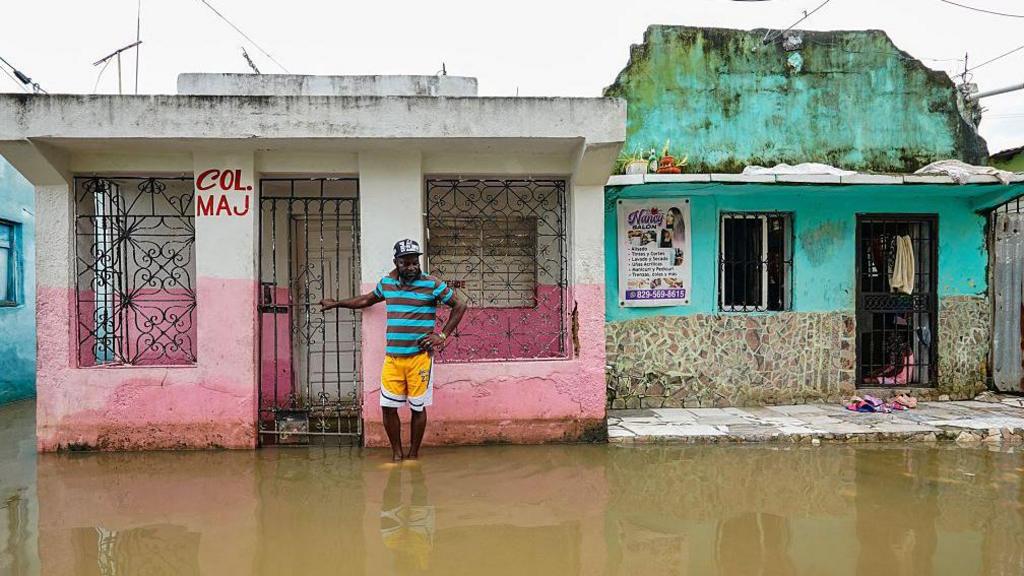
Hurricane Melissa, now barreling across the Caribbean, has left Jamaica in ruins and struck Cuba early Wednesday as it continues its north-eastward track through the region. The storm made landfall in Jamaica’s southwestern parish of St. Elizabeth with estimated winds up to 185 mph, then weakened slightly before hitting Cuba as a Category 3 hurricane with 120 mph sustained winds. (Reuters)
In Jamaica, Prime Minister Holness declared a “disaster area” and warned that the nation’s infrastructure simply wasn’t built to endure such a storm.
“There is no infrastructure in the region that can withstand a Category 5,” Holness said after the storm’s passage. (Reuters)
More than 500,000 customers were left without power in Jamaica, and the parish of St. Elizabeth was described as being “underwater” after catastrophic flooding and a storm surge. The full extent of the damage remains unresolved with early reports indicating collapsed roofs, blocked roads and damaged hospitals. (Reuters)
Cuban authorities reported that upwards of 735,000 people were evacuated ahead of landfall in the provinces of Granma, Santiago de Cuba, Guantánamo, Holguín and Las Tunas. The storm is expected to bring heavy rainfall (up to 20 inches) and a storm surge as high as 12 feet in eastern Cuba, with multiple provinces under hurricane warning. (AP News)
Why This Storm Is So Alarming
Rapid intensification: The storm underwent a dramatic surge in intensity before hitting Jamaica, making it one of the most powerful Atlantic landfalls in recorded history. (AP News)
Multiple hazard threats: In both Jamaica and Cuba, destructive winds, storm surge, torrential rainfall and landslides are all present — amplifying the risk to life and property.
Climate factor: Experts say unusually warm sea-surface temperatures in the Caribbean helped fuel the storm’s strength, pointing to climate change as a driver of such extreme weather events. (AP News)