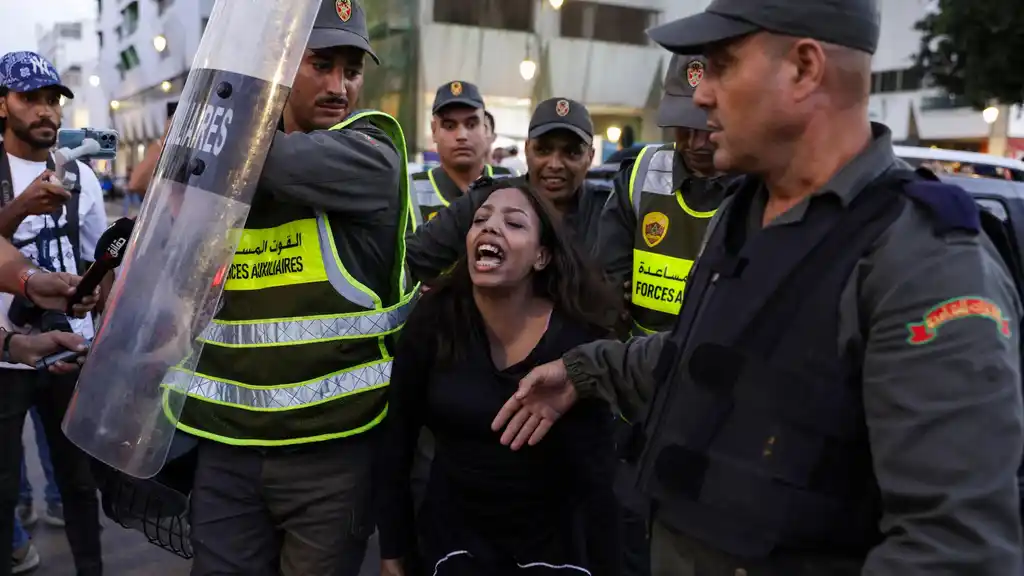
The Moroccan authorities have announced that over 2,400 young people are facing prosecution following a series of youth-led protests demanding reforms in education, healthcare, and employment — a movement now widely known as the Gen Z 212 protests.
According to the Moroccan public prosecutor’s office, a total of 2,480 individuals have been charged, with 1,473 currently in custody awaiting trial. The protests, which swept through major cities including Rabat, Casablanca, Agadir, and Oujda, were largely organised via social media platforms such as TikTok and Discord, giving voice to young Moroccans frustrated by the country’s socioeconomic challenges.
Authorities allege that a significant portion of the protests turned violent. Approximately one-fifth of defendants were charged with “rebellion as part of a group,” while others face accusations including assaulting law enforcement officers, vandalism, and incitement to commit crimes. Over 60 individuals have reportedly been sentenced to prison terms of up to 15 years for offences including arson and looting, according to reports from LiveMint and The New Arab.
Rights organisations, including Amnesty International and Human Rights Watch, have condemned the Moroccan government’s response as excessive and repressive, warning that many of those arrested were peaceful demonstrators or bystanders.
“The use of excessive force and the broad application of severe charges against young protesters raise serious concerns about Morocco’s commitment to freedom of assembly and expression,” Human Rights Watch stated in a recent report.
The protests have highlighted deep social tensions in the North African kingdom, where youth unemployment and underfunded public services have become long-standing grievances. Analysts say the government’s handling of the crisis could shape Morocco’s political and social landscape for years to come.
Sources: