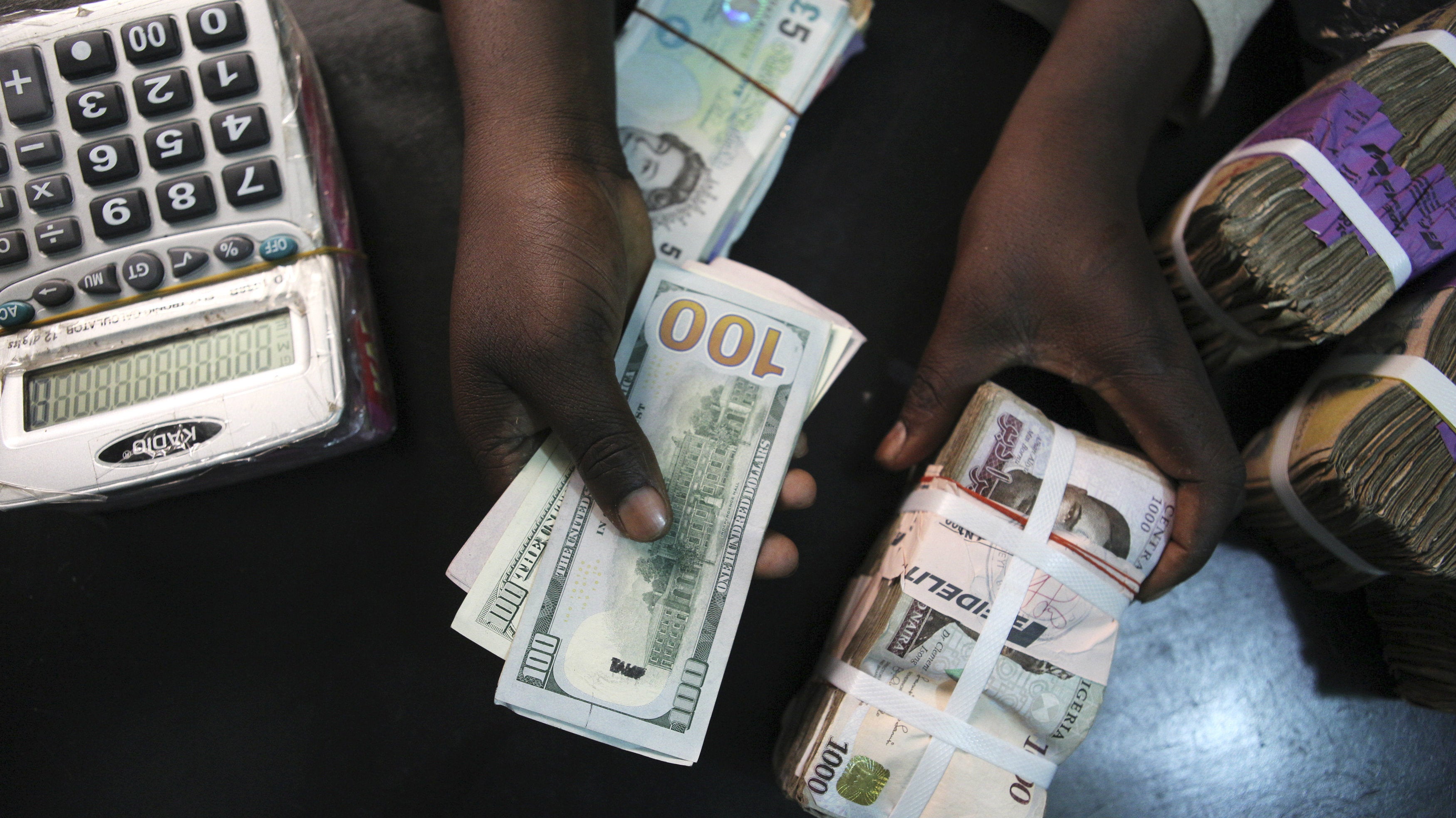
Despite assurances of stability, the naira remains volatile. Official CBN rates are lower than black market prices, with the dollar, pound, and euro all trading significantly higher in street markets. Analysts warn that without stronger inflows and reforms, the gap will continue to weigh on businesses and households.
Exchange Rates Today
Currency | CBN Official Rate (₦) | Black Market Buy (₦) | Black Market Sell (₦) |
|---|---|---|---|
US Dollar (USD) | 1,421.73 | 1,445 | 1,450 |
British Pound (GBP) | 1,863.66 | 1,950 | 1,980 |
Euro (EUR) | 1,640.40 | 1,665 | 1,690 |
Canadian Dollar (CAD) | 1,000–1,100 | 1,000 | 1,100 |
Chinese Yuan (CNY) | 199.70 | 190 | 210 |
Saudi Riyal (SAR) | 379.09 | — | — |
South African Rand (ZAR) | 81.83 | 90 | 110 |
UAE Dirham (AED) | — | 385 | 410 |
Ghanaian Cedi (GHS) | — | 90 | 115 |
West African CFA (XOF) | 2.55 | 2,500 | 2,600 |
The naira’s struggle against major global currencies continued today, with the official and parallel market rates diverging sharply. According to the Central Bank of Nigeria (CBN), the naira closed at ₦1,421.73 per U.S. dollar on the Nigerian Foreign Exchange Market. However, in the black market, traders quoted the dollar at ₦1,445–₦1,450, underscoring persistent demand pressures.
The British pound traded at ₦1,863.66 officially, but sold for as high as ₦1,980 on the parallel market. Similarly, the euro exchanged at ₦1,640.40 officially, compared to ₦1,690 in street trading.
Other currencies also reflected the gap. The Canadian dollar sold for up to ₦1,100, the Chinese yuan at ₦210, and the South African rand at ₦110 in the black market.
Analysts say the widening spread between official and parallel rates reflects limited dollar supply, high import demand, and speculative activity. Businesses reliant on imports continue to face rising costs, while households struggle with inflationary pressures linked to the weakening naira.
The federal government has pledged to boost foreign exchange inflows through oil revenues, diaspora remittances, and investment incentives. But until supply improves, the naira is expected to remain under strain.
Sources: CBN Exchange Rates, Aboki Forex, ExchangeRate.guru