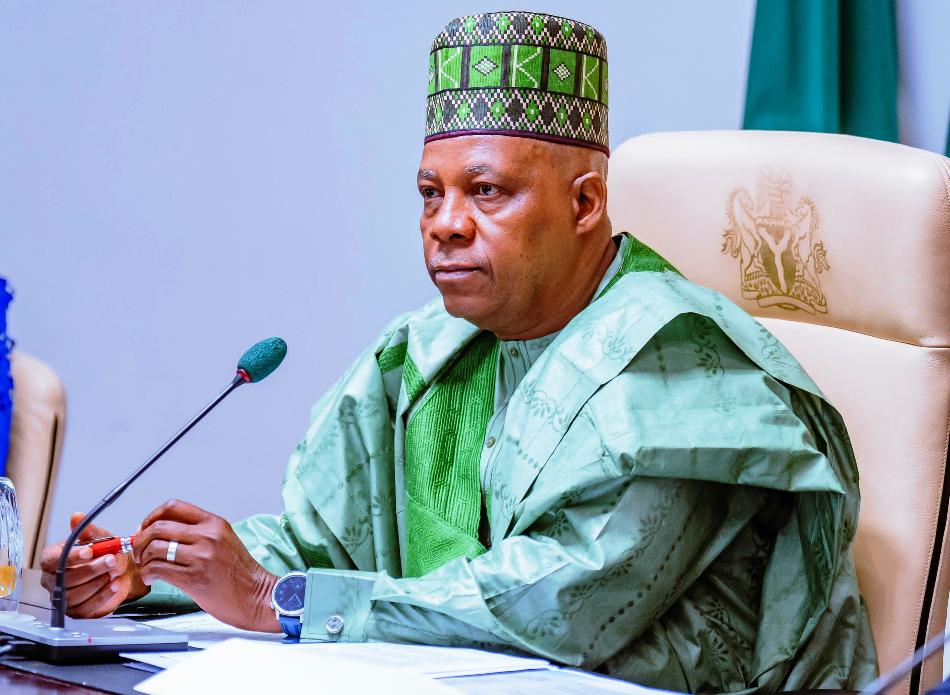
Vice President Kashim Shettima has reaffirmed that President Bola Tinubu’s administration is firmly committed to protecting press freedom and advancing the journalism profession in Nigeria.
Speaking on Wednesday when he hosted a delegation from the Nigeria Union of Journalists (NUJ) at the Presidential Villa, Abuja, Shettima described the media as “the lifewire of the nation,” emphasizing that the government “cannot afford to muzzle” journalists.
“In President Bola Tinubu, you have a friend, an ally, and a proprietor who has been kind to the Nigerian media over the years,” the Vice President said. “I want to assure you that this administration will do its best to promote, project, and preserve the interests of the journalism profession.”
Media as the Conscience of the Nation
Shettima underscored the vital role journalists play in democracy, comparing their responsibility to that of the judiciary in holding public officials accountable.
“Journalists are expected to adjudicate on issues of governance,” he said, noting that past generations of Nigerian leaders, including Herbert Macaulay, Nnamdi Azikiwe, and Obafemi Awolowo, were all journalists before becoming political figures.
He acknowledged the financial struggles many Nigerian media houses face, including the inability to regularly pay staff salaries, but expressed optimism that President Tinubu’s government will continue to support the industry.
“We cannot afford to allow the journalism profession to die,” Shettima said, adding that the administration would explore ways to ensure media organisations remain sustainable.
NUJ’s Call for Media Reforms
Earlier, the National President of the NUJ, Alhassan Abdullahi, outlined key challenges confronting the journalism profession and called on the government to strengthen protections for journalists.
Abdullahi urged the Vice President to champion a firm stance on press freedom, including a review of colonial-era laws that criminalise journalism, particularly sections of the Criminal and Penal Codes.
He also demanded that libel be decriminalised, stressing that journalists should not face imprisonment for performing their constitutional duties.
The NUJ further proposed a national safety protocol for journalists, developed in collaboration with security agencies, to ensure reporters are protected in the course of their work.
Partnerships and Policy Proposals
Abdullahi also called for a Media Support Framework, which would include training grants, soft loans, tax reliefs, and targeted bailouts for struggling media houses.
He suggested that the government collaborate with institutions like TETFUND, universities, and international journalism schools to improve professional standards through continuous education.
Additionally, the NUJ proposed the creation of a Permanent Government–Media Liaison Platform under the Vice President’s office to facilitate regular engagement, clarify government policies, and curb misinformation.
NUJ Pledges Cooperation with the Government
While pledging the Nigerian press’s continued support for the Tinubu administration’s development agenda, Abdullahi reaffirmed that journalists will continue to “speak truth to power” in defense of democracy.
“We are institutional partners and will not be drowned in the false narrative that the media must be antagonistic to government,” he said. “When things are done right, we will applaud; when they are not, we will speak up.”
He commended the administration’s bold economic reforms and efforts to stabilise the economy, noting that despite global headwinds, Nigeria has shown resilience through Tinubu’s policy direction.