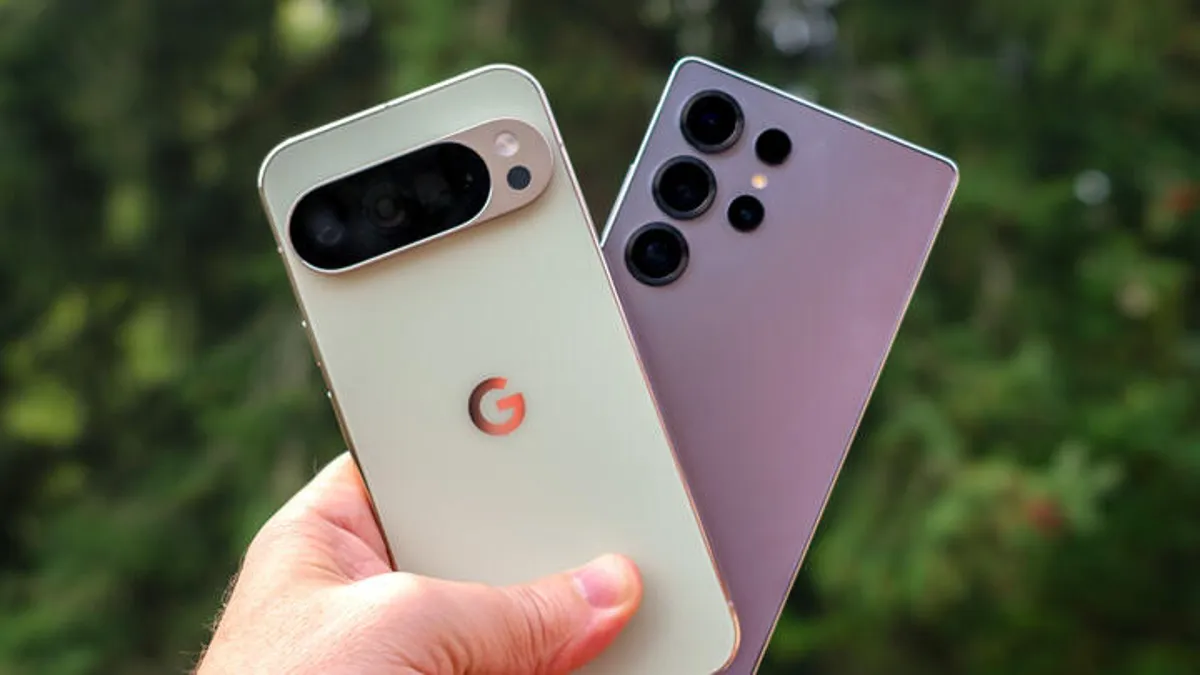
2025 wasn’t just another year of incremental smartphone upgrades — it was the year mobile devices became intelligent companions. With AI-first processors, foldable designs that finally feel durable, and cameras that rival professional gear, this year’s lineup redefined what a phone can be. From Apple’s iPhone 16 Pro Max to Samsung’s Galaxy S25 Ultra, the devices of 2025 set a new standard for mobile innovation, blending raw power with everyday usability.
The Big Picture: What Changed in 2025
Smartphones in 2025 are no longer just communication tools. They are AI-powered hubs for productivity, creativity, and entertainment. Several key shifts defined this year:
AI Everywhere: Apple’s M4 chip, Google’s Gemini AI, and Qualcomm’s Snapdragon 8 Gen 4 brought on-device intelligence to mainstream phones. Tasks like photo editing, transcription, and predictive assistance now run locally, reducing reliance on the cloud.
Foldables Matured: Samsung’s Galaxy Z Fold 7 and Google’s Pixel 10 Pro Fold proved foldables are no longer fragile experiments. Hinges are sturdier, displays more resilient, and software optimized for multitasking.
Camera Wars Escalated: 200MP sensors, periscope zooms, and computational photography made phones legitimate pro tools. AI-assisted editing and real-time enhancements became standard.
Battery & Charging: 24+ hour endurance and sub-30 minute full charges became the norm, thanks to silicon-carbon batteries and smarter charging algorithms.
Design Evolution: Slimmer bezels, lighter foldables, and Pantone-inspired finishes (Motorola Razr Ultra) made phones fashion statements as much as tech tools.
Major Releases in 2025
Brand | Model (2025) | Key Features |
|---|---|---|
Apple | iPhone 16 Pro Max | 6.9" Super Retina XDR OLED, M4 chip, advanced AI camera |
Apple | iPhone 16 Pro | Smaller form factor, same AI features, titanium build |
Apple | iPhone SE 4 | Affordable, compact, A17 chip, improved battery |
Samsung | Galaxy S25 Ultra | 200MP camera, Snapdragon 8 Gen 4, AI photo editing |
Samsung | Galaxy S25+ | Balanced flagship, 120Hz OLED, AI-driven performance |
Samsung | Galaxy Z Fold 7 | Refined hinge, slimmer design, multitasking AI |
Samsung | Galaxy Z Flip FE | Budget foldable, durable hinge, midrange specs |
Pixel 10 Pro Fold | Gemini AI assistant, triple camera, foldable OLED | |
Pixel 10 Pro | AI-first design, 50MP camera, Tensor G4 chip | |
Pixel 9a | Affordable AI-powered midrange | |
OnePlus | OnePlus 13 | Snapdragon 8 Gen 4, fast charging, OxygenOS AI |
Motorola | Razr Ultra 2025 | Foldable clamshell, Pantone design, 50MP camera |
Motorola | Edge 50 Pro | Curved OLED, AI-enhanced imaging |
Vivo | X200 Pro | Photography-focused, AI-enhanced imaging |
Honor | Magic 7 Pro | AI-driven performance, curved OLED |
Huawei | Mate 70 Pro | HarmonyOS, advanced AI chipset |
Xiaomi | Mi 15 Ultra | 1-inch sensor, 120W charging, AI optimization |
Oppo | Find X7 Pro | Foldable flagship, Hasselblad camera partnership |
Sony | Xperia 1 VII | Cinema-grade camera, 4K OLED display |
Sources: Analytics Insight, GSMArena, Tom’s Guide
Trends Defining 2025 Smartphones
1. AI Integration
AI is no longer a buzzword — it’s the backbone of modern smartphones. Apple’s M4 chip powers real-time photo editing, Google’s Gemini AI assistant offers contextual productivity, and Qualcomm’s Snapdragon 8 Gen 4 brings AI-driven gaming optimizations.
2. Foldables Go Mainstream
Samsung’s Galaxy Z Fold 7 and Google’s Pixel 10 Pro Fold proved foldables are durable enough for daily use. Hinges last longer, crease visibility is reduced, and multitasking software feels natural.
3. Camera Innovation
200MP sensors, periscope zooms up to 10x, and AI-driven computational photography made smartphones rival DSLRs. Sony’s Xperia 1 VII even offered cinema-grade video recording.
4. Charging & Battery
Silicon-carbon batteries extended lifespans, while 120W fast charging (Xiaomi Mi 15 Ultra) made “battery anxiety” obsolete. Wireless charging speeds also improved, with 50W becoming common.
5. Design & Materials
Titanium frames (Apple iPhone 16 Pro), Pantone-inspired finishes (Motorola Razr Ultra), and slimmer foldables made phones both stylish and practical.
Expanded Summary Table
Category | Representative Models (2025) | Defining Features |
|---|---|---|
Flagship Slabs | iPhone 16 Pro Max, Galaxy S25 Ultra, Pixel 10 Pro | AI-first chips, OLED displays, pro-grade cameras |
Foldables | Galaxy Z Fold 7, Pixel 10 Pro Fold, Oppo Find X7 Pro | Durable hinges, multitasking software, slim designs |
Budget Phones | iPhone SE 4, Pixel 9a, Galaxy Z Flip FE | Affordable, AI features, compact builds |
Camera-Centric | Vivo X200 Pro, Xiaomi Mi 15 Ultra, Sony Xperia 1 VII | 200MP sensors, periscope zoom, cinema-grade video |
Design-Focused | Motorola Razr Ultra, Honor Magic 7 Pro | Pantone finishes, curved OLEDs, slim builds |
Performance-Oriented | OnePlus 13, Huawei Mate 70 Pro | Snapdragon 8 Gen 4, HarmonyOS AI, fast charging |
Final Thoughts
2025 smartphones aren’t just communication devices — they’re AI-powered companions, creative studios, and productivity hubs. Whether you want the raw power of the iPhone 16 Pro Max, the versatility of the Galaxy S25 Ultra, or the futuristic foldables like Pixel 10 Pro Fold, this year’s lineup proves the smartphone is still the most important gadget in our lives.
The choice isn’t just about specs anymore — it’s about how seamlessly your phone integrates into your life. And in 2025, that integration feels effortless.