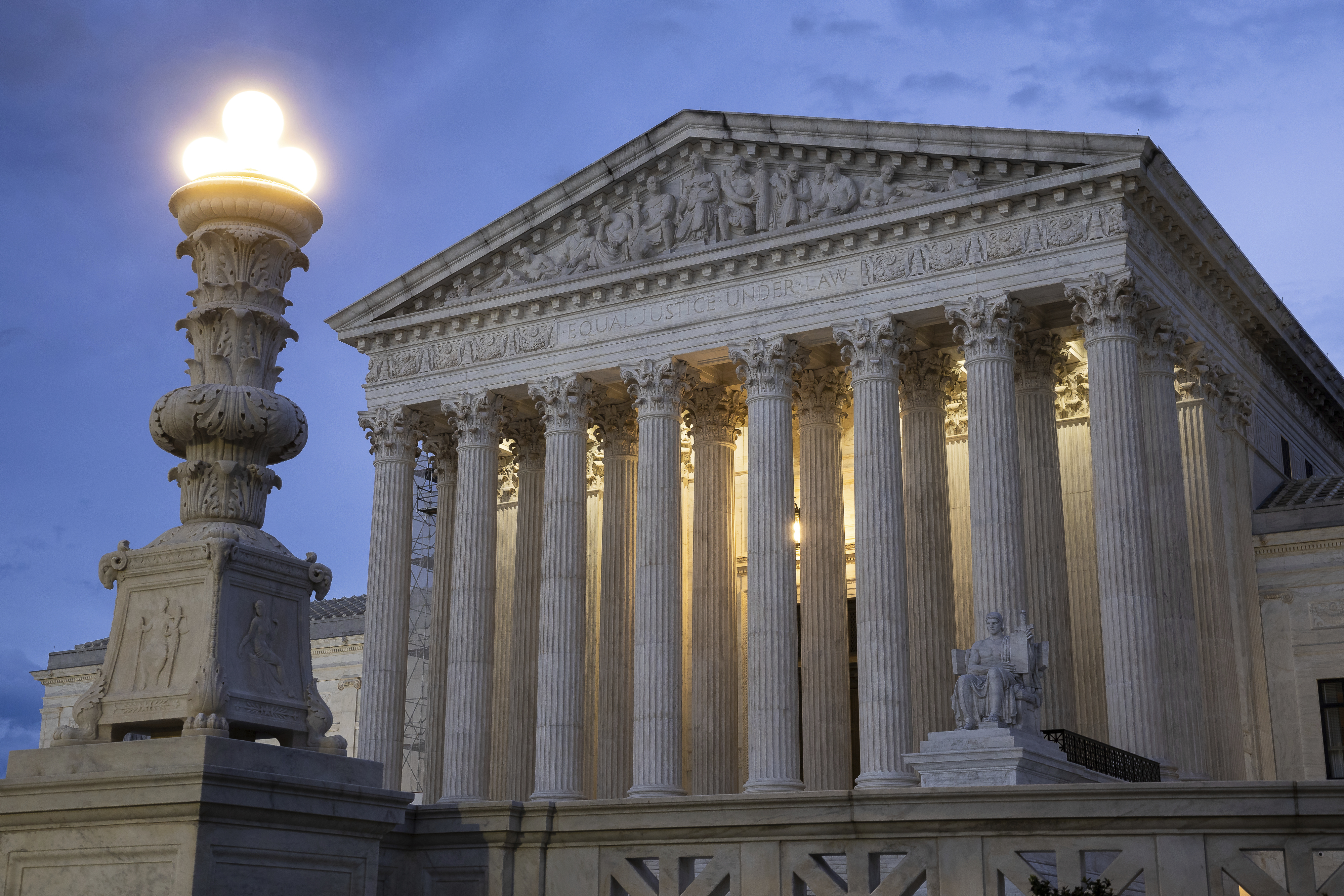
The U.S. Supreme Court has agreed to hear a series of high-profile cases challenging the legality of former President Donald Trump’s tariff measures, which his campaign has vowed to reinstate if he returns to office.
At the center of the dispute is whether Trump’s sweeping use of Section 232 of the Trade Expansion Act of 1962 — which allows presidents to impose tariffs on national security grounds — violated constitutional limits on executive power.
According to Reuters (Nov. 2025), several U.S. business coalitions, including the American Steel Importers Association and National Retail Federation, petitioned the Court to strike down tariffs on steel, aluminum, and Chinese goods that were imposed during Trump’s first term and partially maintained by President Biden.
“This case will determine how far a president can go in shaping trade policy without congressional approval,” said Professor Laura Chen, a trade law expert at Georgetown University.
The New York Times (Nov. 2025) reported that lower courts had upheld the tariffs, citing the president’s broad authority under national security statutes. However, opponents argue the measures were economically punitive rather than security-related, making them unconstitutional.
The Court will also review whether Trump’s proposed “universal tariff” — a 10% blanket tax on all imports, part of his 2024 campaign platform — would exceed presidential powers and potentially violate global trade agreements.
Politico (Nov. 2025) noted that the case has significant implications for U.S. trade relations, especially with China and European allies who retaliated with tariffs of their own, triggering one of the most intense trade wars in decades.
“The Supreme Court’s decision could redefine the balance of power between the White House and Congress on trade,” said Dr. Michael Abrams, a political economist at the Brookings Institution.
BBC News (Nov. 2025) reported that both the Biden and Trump legal teams have submitted briefs defending the use of Section 232 authority, though Biden’s administration urged “judicial restraint” to avoid undermining national security flexibility.
Al Jazeera (Nov. 2025) added that the hearings come amid growing debate over economic nationalism, as Trump continues to promote tariffs as a cornerstone of his “America First 2.0” agenda.
A ruling is expected by mid-2026, potentially reshaping how future presidents wield trade powers.
Sources
Reuters – U.S. Supreme Court to hear challenges to Trump-era tariffs (Nov 2025)
The New York Times – Court to decide if Trump exceeded authority in tariff policies (Nov 2025)
Politico – Trump’s trade agenda faces Supreme Court test (Nov 2025)
BBC News – Supreme Court revisits legality of Trump’s tariffs (Nov 2025)
Al Jazeera – Trump’s tariff battles return to Supreme Court spotlight (Nov 2025)