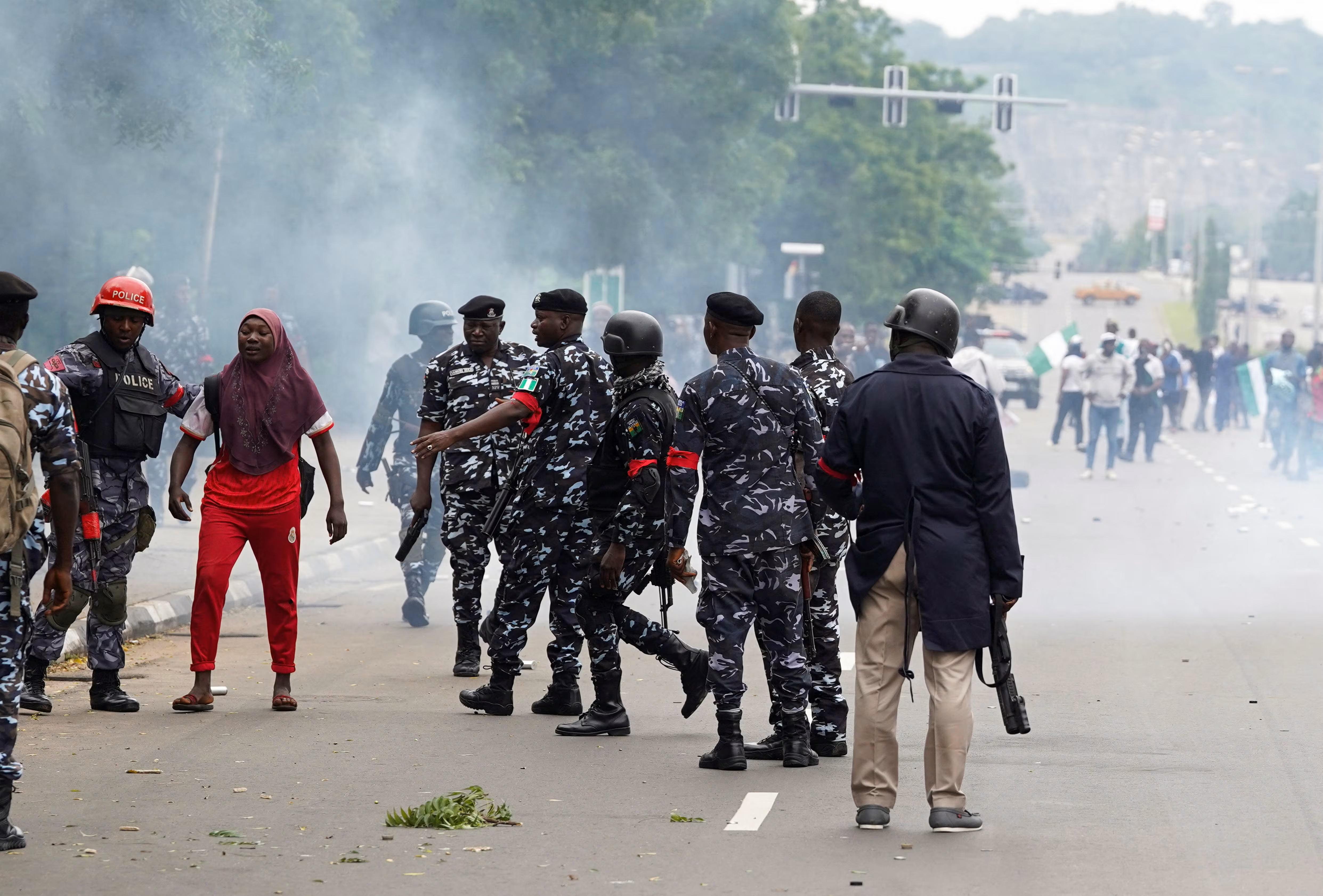
ABUJA, Nigeria – On Monday, the capital city of Abuja became the scene of a dramatic confrontation between protesters and security forces as crowds demanded the release of Nnamdi Kanu, leader of the banned separatist organisation Indigenous People of Biafra (IPOB). In response, the Nigeria Police Force deployed tear-gas, water-cannons, barricades and armoured vehicles across major roads to prevent the protests from spreading. (Reuters)
Witnesses say the demonstration began peacefully in several parts of the city as groups of supporters of Kanu rallied under the slogan #ReleaseNnamdiKanuNow. But it soon escalated: security forces moved in, firing tear-gas canisters and using force to push the crowds back. At least one journalist was arrested—his equipment reportedly destroyed—while gunshots were heard in the area, adding to the chaos. (AP News)
Why the protest?
Kanu, a British-Nigerian dual citizen, has been in detention since 2021 and is facing terrorism and treason charges relating to his leadership of IPOB, which advocates for the secession of Nigeria’s oil-rich southeast region, predominantly inhabited by the Igbo ethnic group. (Reuters)
Supporters of Kanu and many in the southeast see his detention as politically motivated—evidence of marginalisation and heavy-handed federal responses to secessionist demands. They point to long-standing grievances stemming from the civil war era (1967-70) and beyond. (Reuters)
What happened during the protest?
Security forces took up positions along major thoroughfares, with water-cannons, armoured trucks and armed police in thwarting gatherings. (Reuters)
Protesters at multiple points tried to march, but were blocked, then dispersed by tear-gas and other crowd-control means. (AP News)
At least one journalist was detained; equipment was confiscated or damaged. (AP News)
Traffic across central Abuja was disrupted, commuters stranded as streets were closed or made impassable. (AP News)
The broader context
The protest highlights a much deeper fault-line in Nigeria. The southeastern region, home to the Igbo ethnic group, has long felt economically, politically and culturally alienated from the centre. The secessionist movement represented by IPOB is rooted in that history. (Reuters)
From the federal government’s perspective, IPOB’s activities are outlawed and the charges against Kanu serious: they include terrorism and treasonable felony, offences which carry life sentences. (Reuters)
Response from authorities
The Nigeria Police Force argued that their actions were necessary: they stated protesters attempted to approach high-security zones (such as the presidential residence or major federal institutions) and blocked roads, forcing them to intervene to keep order. (Anadolu Ajansı)
Yet critics say the force used was excessive, and that peaceful demonstrators were met with heavy-hand policing. The arrest and mistreatment of journalists at the scene have also drawn concern from media freedom advocates. (Anadolu Ajansı)
What happens next?
Kanu’s trial remains ongoing, and this latest flare-up is likely to fuel further agitation in the southeast. Some analysts warn that unless the root social and political grievances are addressed, such protests may recur—and possibly escalate.
For the federal government, the balancing act is acute: managing secessionist pressure while maintaining national unity, and doing so in a way that does not further alienate an already restive region.
The protest also raises questions about Nigeria’s approach to dissent: how to differentiate between the right to protest and the state’s responsibility to maintain security—especially when large numbers of demonstrators gather in sensitive areas.
Bottom line: Monday’s events in Abuja were not simply a protest about one individual’s detention. They were a flashpoint in Nigeria’s long-standing regional, ethnic and political tensions—a moment where the frustrations of the southeast met the firm arm of the state. As the tear-gas cleared and the roads reopened, what remains is the question of how Nigeria moves forward without letting another spark ignite full-scale unrest.