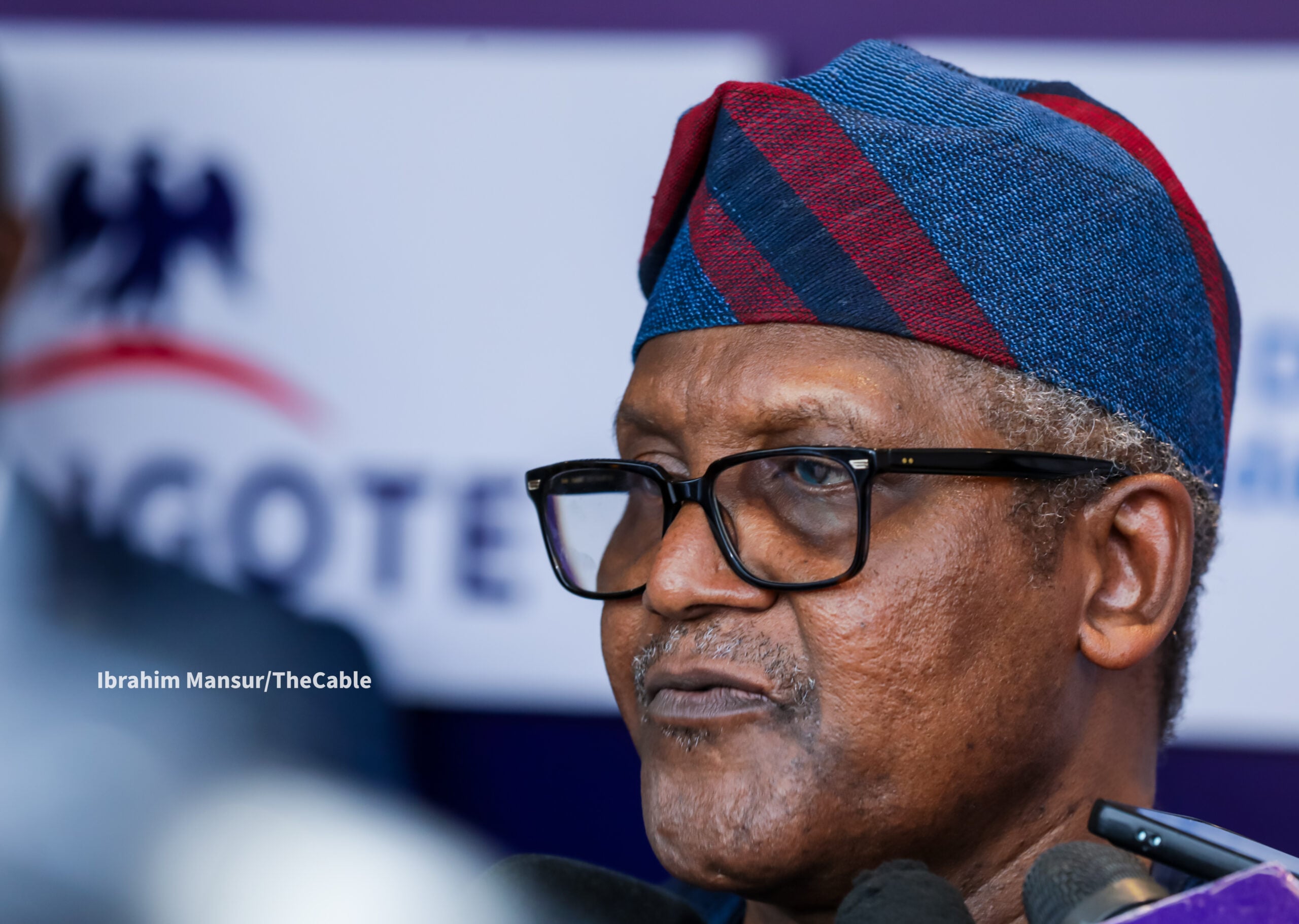
Long before Aliko Dangote became the richest man in Africa, long before his name became shorthand for power, cement, and the sheer force of industrial ambition, he was a boy in Kano selling sweets for pocket money. What he didn’t know then was that this small act of trading would foreshadow a life spent reshaping Nigeria’s economy — and attracting the kind of scrutiny that only comes when one man becomes bigger than entire industries.
A Beginning Rooted in Empire
Aliko Dangote was born on 10 April 1957 in Kano, Nigeria Wikipedia, into a family where commerce wasn’t just a livelihood — it was a legacy. His maternal great‑grandfather, Alhassan Dantata, was one of the wealthiest men in West Africa, supplying groundnuts to the Royal Niger Company during the colonial era Wikipedia.
Dangote grew up surrounded by trade, caravans, and the hum of business. He once recalled:
“I would go and buy cartons of sweets and start selling them just to make money.”
- Investopedia
This wasn’t a hobby. It was destiny.
After studying business at Al‑Azhar University in Cairo Britannica, he returned to Nigeria in 1977 and borrowed money from his uncle to start a small trading firm. He repaid the loan in three months Investopedia.
The empire had begun.
The First Spark: Building the Dangote Group
By 1981, Dangote had incorporated multiple businesses and formally established the Dangote Group Britannica. What began as a commodities trading outfit soon expanded into:
- Sugar
- Flour
- Pasta
- Salt
- Cement
- Haulage
- Food processing
His companies became some of the largest employers in Nigeria, and his cement business alone would eventually generate $3.7 billion in revenue by 2023 Wikipedia.
Dangote wasn’t just building companies. He was building infrastructure — the kind governments usually build.
The Empire Expands: Cement, Sugar, and a Refinery the Size of a City
Dangote Cement became the crown jewel of his empire, dominating markets across Africa and outcompeting global giants like Lafarge Wikipedia. But his most audacious project was yet to come.
The Dangote Refinery
A $19+ billion refinery in Lagos — one of the largest in the world — designed to end Nigeria’s dependence on imported fuel. After years of delays, it began producing diesel and aviation fuel in January 2024 Investopedia. This wasn’t just a business venture. It was a national intervention.
The Phenomenon: Why Dangote Matters
To understand Dangote is to understand Nigeria’s unrealised industrial potential. As Leadership Nigeria notes, the country’s economy was historically shaped around trade and extraction, not production Leadership. Colonial infrastructure was designed to export raw materials and import finished goods Leadership.
Dangote broke that pattern. He built factories where others imported. He built supply chains where others relied on foreign ones. He built industries where governments hesitated. He became the industrialist Nigeria never had — and desperately needed.
The Storm Begins: Power Attracts Scrutiny
For decades, Dangote’s public image was almost mythic — the benevolent billionaire, the nation‑builder, the philanthropist.
But in 2025, the narrative shifted.
The Corruption Petition
In December 2025, Dangote publicly accused Farouk Ahmed, former head of the Nigerian Midstream and Downstream Petroleum Regulatory Authority, of living far beyond his lawful income OloriSuperGal.
He alleged that Ahmed’s children attended elite European schools costing over $5 million for secondary education and $2 million for tertiary education, including a Harvard MBA OloriSuperGal.
In January 2026, Dangote escalated the matter by filing a formal corruption petition with the EFCC, urging a full investigation into alleged abuse of office and illicit enrichment OloriSuperGal.
The ICPC confirmed that its own investigation would continue despite Dangote withdrawing his earlier petition OloriSuperGal. This wasn’t just a legal move. It was a public declaration of war.
The Man Behind the Myth
Strip away the billions, the factories, the refinery, and the political influence, and Aliko Dangote remains a paradox:
- A billionaire shaped by a trading dynasty
- A capitalist who built industries governments failed to build
- A philanthropist who partnered with the Gates Foundation to eradicate polio Investopedia
- A businessman whose power invites both admiration and suspicion
- A national symbol whose actions ripple across the continent
He is not easily defined. Not hero. Not villain. But a force — one that has bent Nigeria’s industrial landscape around his will.
And as Nigeria debates corruption, industrialisation, and economic sovereignty, one question lingers:
Can a single man carry the weight of a nation’s industrial dreams — without becoming entangled in its political storms?
Sources
- Olorisupergal — Dangote’s corruption petition to EFCC OloriSuperGal
- Leadership Nigeria — Industrial context & Dangote’s significance Leadership
- Britannica — Early life, family, education, business beginnings Britannica
- Wikipedia — Business empire, refinery, wealth, awards Wikipedia
- Investopedia — Net worth, early trading, refinery launch, philanthropy Investopedia