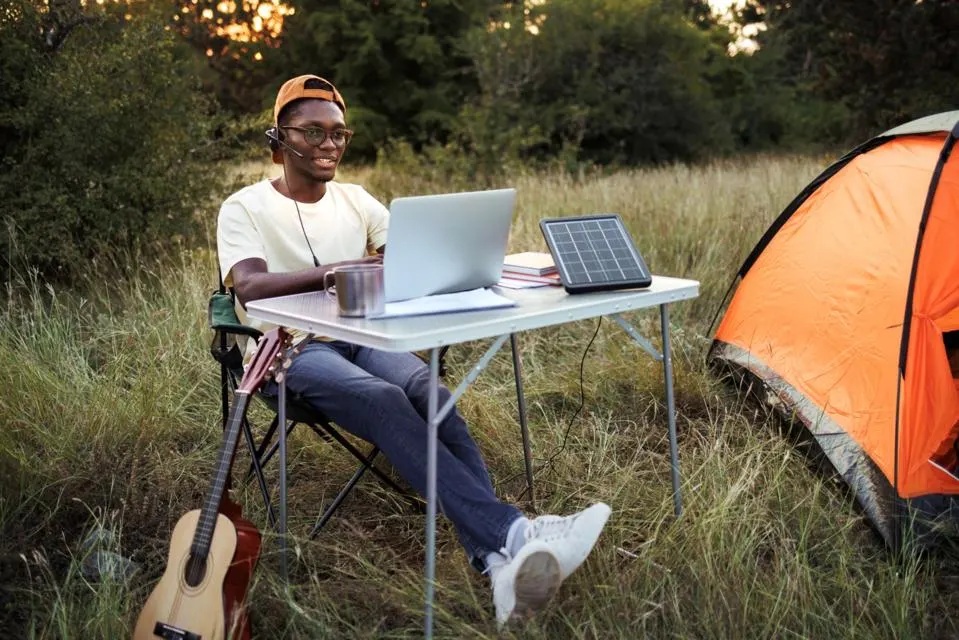
1. Remote Work: From Emergency Fix to Default Mode
While remote working surged during the COVID-19 lockdowns, new data show it’s sticking around and evolving into the baseline. Some estimates suggest a large portion of knowledge workers now operate under fully remote or hybrid arrangements. (earlybullets.com)
What does this mean for how we live?
Homes become dual-purpose: living room by day, Zoom workspace by morning, freelance studio by night.
Urban commuters are fewer. Instead, more people choose homes in cheaper or more lifestyle-friendly locations, rather than being anchored by proximity to the office. (Think: second city, suburb, even rural area.)
Employers widen their talent pool beyond the metro corridor. Location becomes decoupled from employment in many industries.
2. Digital Nomads: A Growing Global Workforce on the Move
Parallel to remote work for employees is the rise of the digital nomad: those who combine travel and work, not just working from home. Some key markers:
The number of digital nomads worldwide has been estimated at 40-50 million in 2025. (African Business)
Destination countries no longer just entice tourists—they now offer digital nomad visas and co-living/co-working ecosystems. (Knight Frank)
Stay patterns are evolving. Many “slow-mads” now stay months in one location rather than hopping weekly. (travelscrape.com)
This trend is expanding the geography of opportunity: remote workers and nomads aren’t just in London/New York/San Francisco—they’re in Nairobi, Cape Town, Medellín, Tbilisi. African markets, for example, are actively positioning for this influx. (African Business)
3. Housing and Urban Shift: Zoom Towns, Co-Living & Mobility
The lifestyle shifts in work and travel are directly influencing housing and urban patterns. Here’s what’s happening:
Zoom Towns
Small cities or attractive towns that are seeing a surge of inbound remote workers due to affordability, quality of life and connectivity. (Wikipedia)
Implication: local housing demand rises, costs increase, infrastructure gets stressed or upgraded, and community dynamics shift.
Co-living and Co-working Boost
Remote workers demand spaces that combine living, work and community — especially when on the move. Reported trends: co-working and co-living arrangements dominate many nomad hubs; nearly 23 % of nomads work from their accommodation. (travelscrape.com)
Implication: real-estate models evolve — shorter leases, furnished units, integrated work-spaces, shared amenities.
Rental and Housing Market Impacts
With remote workers relocating, housing pressure in popular destinations is rising. At the same time, traditional office-district housing may see less demand.
Implication: cities must balance preserving affordability and managing gentrification while tapping into the economic benefit of inbound remote-work talent. (Dialnet)
4. Travel Re-imagined — From Frequent Flyers to Strategic Movers
Remote work and nomadism are changing travel behaviours in several ways:
Short business trips morph into longer stays; many remote workers base themselves for months in locations rather than flying in/out. (travelscrape.com)
Travel becomes integrated with lifestyle: workation, slow travel, hybrid “bleisure” stays. (resultsdiscount)
Destinations tailor their offerings: high-speed internet, nomad-friendly visa policies, remote-work hubs. (Knight Frank)
For example, Africa is no longer just a safari destination—it’s becoming attractive to “work-from-paradise” professionals seeking culture + connectivity. (African Business)
5. Opportunities and Challenges: What to Watch
Opportunities:
For workers: greater lifestyle choice, better work-life integration and location flexibility.
For cities and regions: ability to attract skilled inbound remote workers, generate new economic activity and renew urban/rural areas.
Challenges:
Housing affordability: as remote workers relocate, local housing markets risk inflation and displacement of long-term residents.
Infrastructure strain: smaller towns turning into remote-worker hubs may need broadband, transport, public services upgrades.
Legal/regulatory complexity: tax issues, visa rules, employment regulation, social-security continuity become more complex.
Sustainability of lifestyle: digital nomadism can bring isolation, burnout, and logistic fatigue. (Reddit)
6. What It Means for Nigeria & Africa
Given your base in Lagos and focus on Africa (via your news/business interest), the trends are particularly relevant:
Nigeria and African cities have the opportunity to position themselves as remote-work hubs: via improved connectivity, co-working/co-living infrastructure and targeted visas.
Local housing markets may begin to experience migration of remote-workers (domestic or international), creating pressure on urban housing supply.
Travel and tourism sectors can pivot: remote-work stays generate longer-term stays than typical tourists, creating stable revenue streams.
Policymakers need to anticipate regulation: remote-work visas, tax frameworks for inbound remote professionals, housing policy to protect local communities.
Conclusion
The lifestyle shift toward remote work and digital nomadism is far more than a temporary trend—it’s altering the fundamentals of how and where we work, live and travel. Housing markets are shifting, urban geographies are rethinking themselves, travel is getting more intentional. For countries like Nigeria and regions across Africa, this presents a strategic inflection point: those who build the infrastructure, policy and ecosystem today may capture a wave of economic and lifestyle change tomorrow.