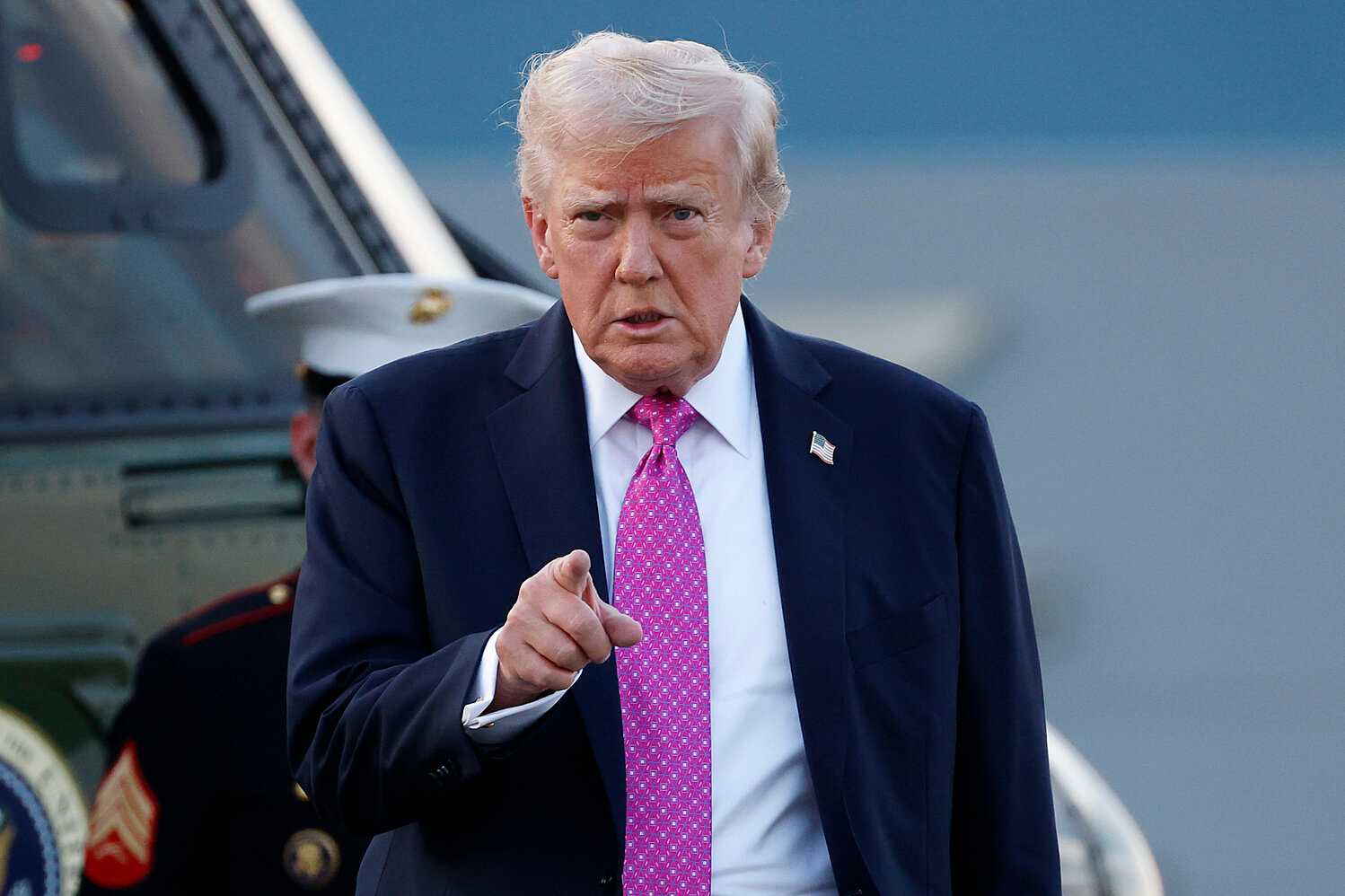
The United States, under the administration of former President Donald Trump, has designated Nigeria as a “Country of Particular Concern” (CPC) over what it described as “ongoing and egregious violations of religious freedom,” citing repeated attacks on Christian communities across the country.
Trump made the announcement on his social media platform, Truth Social, stating that Christianity was facing an “existential threat” in Nigeria, where “thousands of Christians are being killed” by what he called “radical Islamist extremists.” The designation, under the U.S. International Religious Freedom Act (IRFA), enables Washington to impose sanctions or restrict aid on countries found to violate religious freedom.
“We will not stand idly by while entire Christian communities are slaughtered,” Trump declared. “The United States must use every tool available to protect religious liberty worldwide.”
(Source: Reuters)
Nigeria’s Response
The Nigerian government quickly rejected the move, describing it as “misleading and politically motivated.” A spokesperson for the presidency said the CPC label was based on “distorted narratives” that ignored Nigeria’s complex security realities.
“These conflicts are not purely religious — they are driven by terrorism, banditry, and economic factors,” the statement read. “The attempt to brand Nigeria as a nation persecuting Christians is part of a coordinated lobby to pressure Washington into sanctioning our country.”
(Source: Vanguard Nigeria)
Background
The “Country of Particular Concern” status is the U.S. government’s highest ranking for nations accused of religious repression. It opens the door for measures such as sanctions, visa restrictions, and limitations on non-humanitarian aid.
This marks the second time Nigeria has appeared on the CPC list — after its first designation in 2020, which was later removed by the Biden administration in 2021. Lawmakers such as Senator Ted Cruz and religious advocacy groups had urged the U.S. to re-designate Nigeria, citing “mass killings of Christians” in parts of the Middle Belt and North-West.
(Sources: Catholic News Agency, AP News)
Analysts’ View
Security experts argue that while religious violence has occurred, the broader picture in Nigeria is more nuanced. The conflict between herders and farmers, terrorist insurgencies, and political instability have affected both Christians and Muslims alike.
“It’s inaccurate to classify Nigeria’s violence as one-sided religious persecution,” said a senior analyst quoted by AP News. “Communal and economic drivers play just as big a role.”
Implications
The CPC designation is expected to strain U.S.–Nigeria relations. It could affect military assistance, foreign aid, and diplomatic cooperation if Washington moves to implement punitive measures.
Meanwhile, human-rights organisations are urging Abuja to strengthen protection for vulnerable communities and ensure that perpetrators of religiously motivated violence are prosecuted without bias.
Sources: