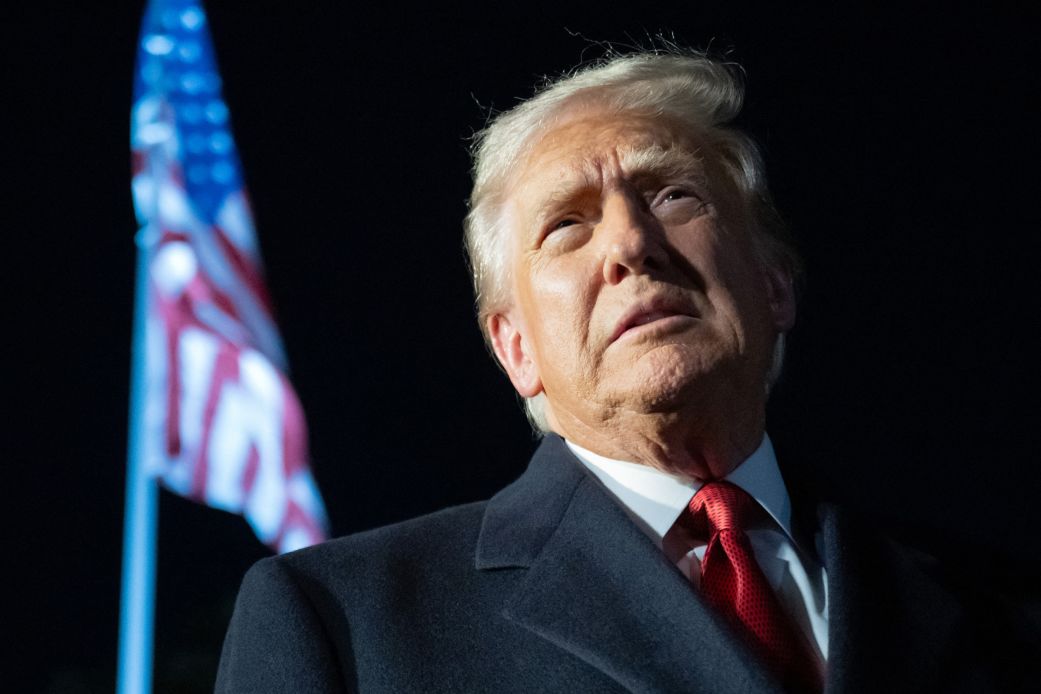
In a move that has sent shockwaves through the global security community, U.S. President Donald Trump has ordered the immediate resumption of nuclear weapons testing, ending more than three decades of restraint since the last American test in 1992.
The announcement was made just hours before Trump’s scheduled meeting with Chinese President Xi Jinping in Busan, South Korea. In a post on his Truth Social platform, the U.S. leader stated:
“Because of other countries’ testing programs, I have instructed the Department of War to start testing our Nuclear Weapons on an equal basis. That process will begin immediately.”
Historic Policy Reversal
The United States has maintained a moratorium on nuclear testing since 1992, opting instead for computer simulations and sub-critical experiments. Trump’s directive marks a dramatic reversal of this longstanding policy and signals a new era in U.S. nuclear posture.
Administration officials claim the move is intended to “ensure America’s nuclear deterrent remains credible,” citing alleged advancements in Russia’s and China’s nuclear capabilities.
Global Reactions
The announcement drew swift and strong reactions from across the world.
China’s Foreign Ministry urged the U.S. to “act responsibly and uphold global stability,” while Russia warned that any resumption of testing could “destabilize decades of strategic balance.”
Analysts warn that the decision could trigger a new arms race, undermining decades of non-proliferation progress and weakening the Comprehensive Nuclear Test Ban Treaty (CTBT), which the U.S. has signed but never ratified.
Nuclear policy expert Dr. Elena Kovacs of the Stockholm Peace Research Institute described the move as “a dangerous escalation that threatens to undo years of international restraint.”
Domestic Debate
In Washington, reactions have been divided. Republican lawmakers and some defense strategists praised the move as “necessary to deter adversaries,” while Democrats and arms control advocates condemned it as “reckless and provocative.”
Environmental groups have also raised alarms about the potential consequences of renewed underground testing, citing contamination risks in former testing sites such as Nevada.
What Comes Next
The Pentagon has not yet disclosed where or when the first tests will occur, or whether they will involve full-yield detonations. Analysts believe the Nevada National Security Site is the most likely location for any near-term testing.
Observers say the coming weeks will be crucial as the U.S. faces global scrutiny over whether it intends to carry out physical nuclear explosions or restrict activities to sub-critical experiments.
Sources: