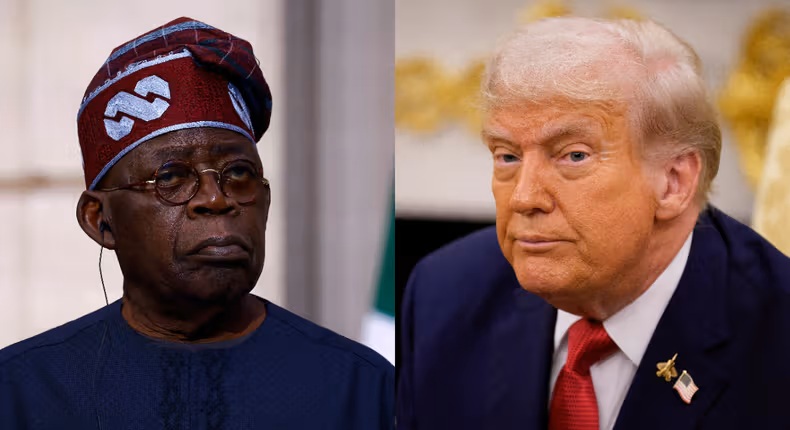
Nigeria’s financial markets are facing renewed volatility following Donald Trump’s threat to launch military action against the country over alleged religious persecution. The former U.S. president, in a post on his Truth Social platform, accused the Nigerian government of allowing the “killing of Christians” and warned that the U.S. could intervene “guns-a-blazing” if the situation persists.
The Nigerian government swiftly rejected the accusations, with President Bola Tinubu reaffirming the country’s commitment to religious freedom. However, the damage to investor sentiment may already be underway.
According to a report by Business Insider Africa, Trump’s comments have increased Nigeria’s country risk, leading to a weaker naira, higher Eurobond yields, and rising borrowing costs for banks and manufacturers. The Central Bank of Nigeria (CBN) had only recently begun easing monetary policy after months of tight controls, but the threat of sanctions or military action could derail that progress.
Nigeria’s Eurobond spreads, which reflect investor confidence in the country’s ability to repay debt, have widened as traders price in greater risk. The Debt Management Office reported active trading into late October, but analysts now warn that risk aversion is driving yields higher, making it more expensive for Nigeria to borrow on international markets.
The naira, already under pressure from foreign exchange shortages, has continued to slide. Parallel market rates have diverged further from official rates, and non-oil exporters are facing higher trade finance costs as Western buyers grow cautious.
Analysts say the broader impact could extend beyond Nigeria. “Africa’s frontier markets are sensitive to geopolitical shocks,” said one Lagos-based economist. “Even the perception of instability can trigger capital flight.”
Trump’s remarks also come at a time when Nigeria is trying to attract foreign investment and stabilize its economy after years of inflation and currency devaluation. The timing, many observers note, could not be worse.