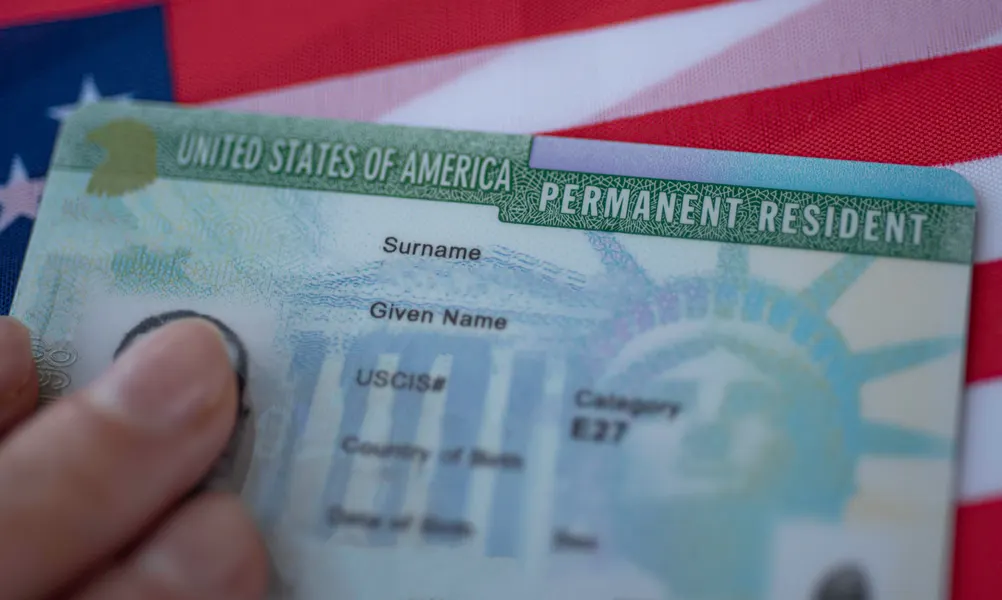
The United States Citizenship and Immigration Services (USCIS) has confirmed that it will conduct a full-scale reexamination of green cards belonging to immigrants from 19 countries designated as “of concern.” The directive came from President Donald Trump after Wednesday’s shooting in Washington, D.C., where two National Guard members were attacked by a gunman identified as Rahmanullah Lakanwal, a 29-year-old Afghan national.
USCIS Director Joseph Edlow announced the move on Thursday, stating: “At the direction of @POTUS, I have directed a full-scale, rigorous reexamination of every Green Card for every alien from every country of concern.” He added that protecting the country remains paramount and that the American people “will not bear the cost of the prior administration’s reckless resettlement policies.” Business Hallmark Legit.ng NBC News
The review stems from a June presidential proclamation that listed 19 countries as deficient in security and information-sharing standards. Nationals from 12 of those countries already face full entry bans, while others are subject to heightened scrutiny.
Countries Affected
According to reports, the 19 countries include:
Afghanistan
Myanmar
Chad
Congo-Brazzaville
Equatorial Guinea
Eritrea
Haiti
Iran
Libya
Somalia
Sudan
Syria
Yemen
Sierra Leone
Mali
Mauritania
Guinea
Cameroon
Central African Republic Business Hallmark Legit.ng Newsweek USA Today Sky News
Context and Implications
This decision underscores the administration’s hardline stance on immigration and national security, particularly in response to violent incidents involving foreign nationals. Analysts warn that the review could affect thousands of immigrants who already hold permanent residency, raising concerns about legal challenges and human rights implications.
For immigrants from the listed countries, the reexamination may mean additional vetting, possible revocation of green cards, or restrictions on travel and employment. The move is expected to spark debate over whether collective measures against entire nationalities are justified or discriminatory.
Sources: