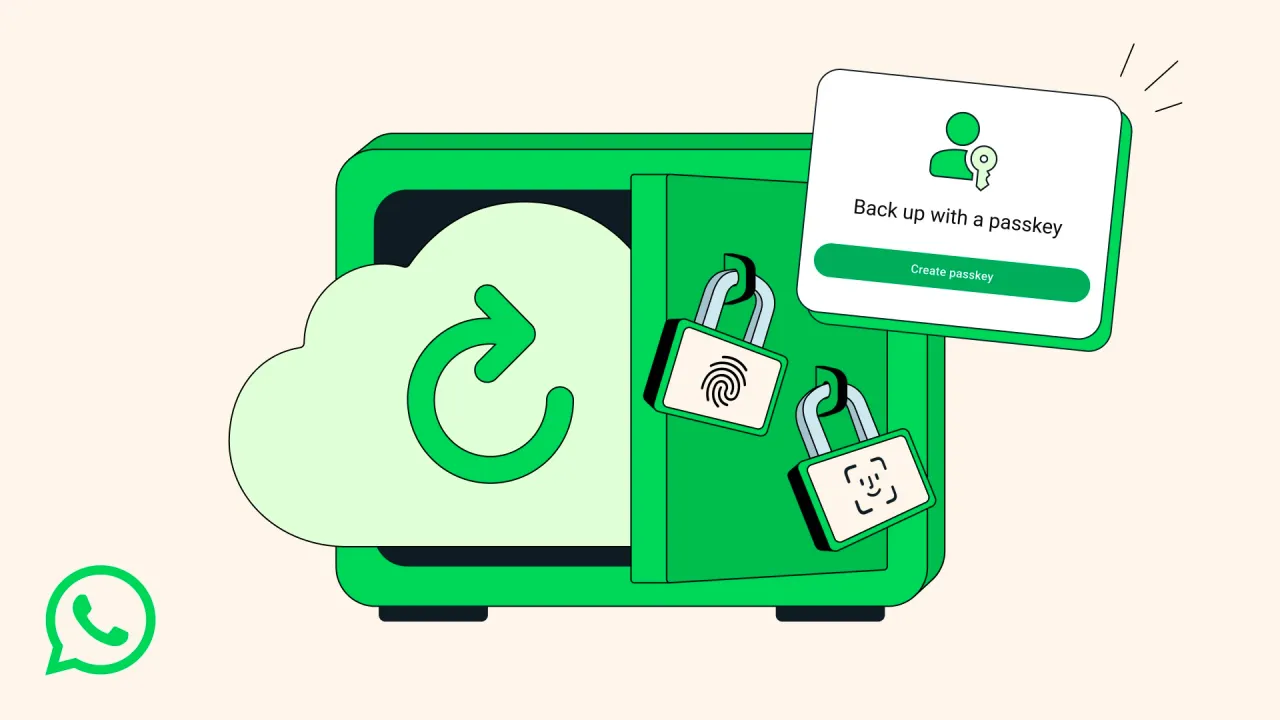
Messaging giant WhatsApp has rolled out a new security feature that allows users to protect their end-to-end encrypted chat backups using passkeys, replacing the need for lengthy passwords or 64-digit encryption keys.
The update, confirmed by The Verge, introduces biometric and device authentication—such as fingerprints, Face ID, or screen lock PINs—as a simpler, more secure method for safeguarding chat backups stored on cloud platforms like Google Drive and iCloud. (The Verge)
According to WhatsApp, the passkey system provides the same level of privacy and encryption as its previous method but eliminates the usability challenges that came with managing long, complex keys.
“We’ve heard from users that while end-to-end encrypted backups offered strong privacy, the process could be cumbersome. Passkeys make it easier and safer to keep your chat history protected,” WhatsApp said in a company statement.
This development builds on WhatsApp’s 2021 introduction of end-to-end encrypted backups, which required users to manually create a password or store a 64-character encryption key to secure their chat histories. The new passkey feature replaces that system with a passwordless approach, aligning with industry trends toward biometric-based authentication. (Facebook Newsroom)
As reported by The Times of India, the feature is currently being rolled out in phases and will be available globally “over the coming weeks.” The update is expected to appear first on Android devices before extending to iOS users. (Times of India)
Security analysts have welcomed the move as a major advancement for everyday privacy. By integrating passkeys, WhatsApp joins tech giants such as Google and Apple in adopting passwordless authentication standards that reduce human error and phishing risks.
“Passkey protection represents the next evolution of privacy. It simplifies user experience while maintaining zero-knowledge encryption — meaning even WhatsApp or the cloud provider can’t access user data,” cybersecurity researcher Anil D’Souza explained.
However, experts also caution users to ensure their device-level security remains strong, as anyone with direct access to a phone and its unlock credentials could potentially restore encrypted backups.