Introduction
In 2025, smartphone innovation is dominated by two names: Samsung and Xiaomi. While Samsung continues to refine its premium Galaxy S line with the Galaxy S25, S25+, and S25 Ultra, Xiaomi aims to outclass its rivals with the Xiaomi 17, 17 Pro, and 17 Ultra.
Both brands are leaning heavily into AI-powered photography, next-gen processors, and stunning AMOLED displays. But which one truly leads the flagship race this year?
Design and Build Quality
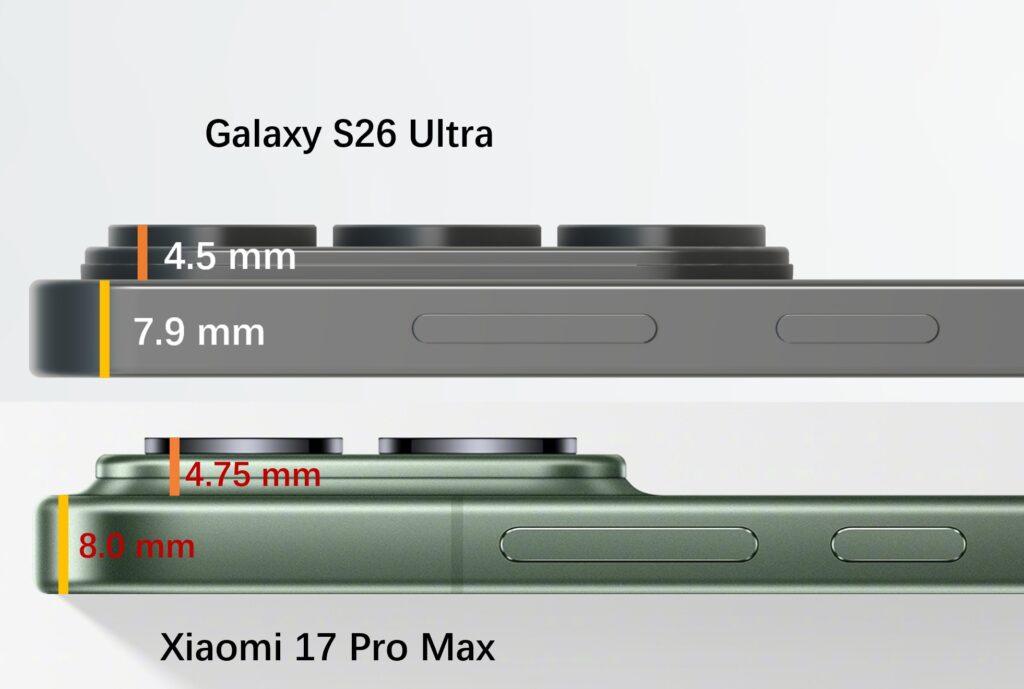
Xiaomi 17 Series: Sleek and minimalist, with ceramic or aluminum finishes and a curved-edge display on the 17 Pro and Ultra. The bezels are almost invisible, and the Ultra variant exudes luxury with its polished ceramic rear.
Samsung Galaxy S25 Series: Samsung sticks to its refined Armor Aluminum and Gorilla Glass Armor design language. The S25 Ultra remains a rectangular slab with the signature S Pen.
Verdict: Xiaomi feels more modern and lightweight, but Samsung wins on durability and functionality — especially with the S Pen integration.
Display Technology
Both companies have set new benchmarks for mobile screens in 2025.
Xiaomi 17 Ultra: 6.73-inch AMOLED LTPO 2.0, 120Hz, peak brightness 3,000 nits.
Samsung S25 Ultra: 6.8-inch Dynamic AMOLED 2X, 120Hz, peak brightness 2,600 nits.
Samsung retains the edge in color calibration and HDR performance, while Xiaomi leads in maximum brightness and screen-to-body ratio.
Verdict: A near tie — Xiaomi wins on brightness, Samsung on color science.
Performance and Processing Power
Xiaomi 17 Series: Powered by Qualcomm Snapdragon 8 Gen 4, built on a 3nm architecture, offering a major boost in AI computation and power efficiency.
Samsung Galaxy S25 Series: The global variant also uses the Snapdragon 8 Gen 4, but the European model uses Samsung’s Exynos 2500 — slightly less efficient.
Both phones deliver lightning-fast performance, but Xiaomi’s optimized HyperOS gives it a smoother AI-enhanced experience, particularly in multitasking and camera processing.
Verdict: Xiaomi wins slightly on optimization, especially in non-U.S. markets where Samsung ships Exynos chips.
Camera System
Feature | Xiaomi 17 Ultra | Samsung Galaxy S25 Ultra |
|---|---|---|
Main Sensor | 50MP Sony LYT-900 (1-inch) | 200MP ISOCELL HP3 |
Ultra-Wide | 50MP | 12MP |
Telephoto | 50MP (5x Optical Zoom) | 50MP (5x + 3x) |
AI Engine | Leica Co-engineered Imaging | Galaxy AI Camera Suite |
Xiaomi’s Leica partnership gives it a cinematic tone and rich detail, while Samsung continues to dominate with zoom versatility and AI scene optimization.
Verdict: For natural color and professional look — Xiaomi. For versatility and zoom power — Samsung.
Battery and Charging
Xiaomi 17 Ultra: 5,000 mAh, 120W wired and 80W wireless charging — full charge in ~20 minutes.
Samsung S25 Ultra: 5,000 mAh, 45W wired, 15W wireless — full charge in ~55 minutes.
Verdict: Xiaomi crushes Samsung in charging speed and thermal management.
Software and AI Integration
Xiaomi 17 Series: Runs HyperOS (Android 15) with deep AI integration — real-time translation, predictive tasks, and Xiaomi Assistant 2.0.
Samsung S25 Series: Ships with One UI 7 (Android 15) featuring Galaxy AI — smart summarization, AI photo editor, and live call translation.
Samsung’s AI feels more connected to cloud-based services, while Xiaomi focuses on on-device intelligence, making it more privacy-friendly and faster offline.
Verdict: Samsung wins for ecosystem AI (Galaxy AI + Google), Xiaomi wins for privacy and on-device speed.
Pricing and Value
Model | Starting Price (USD) |
|---|---|
Xiaomi 17 | $699 |
Xiaomi 17 Pro | $899 |
Xiaomi 17 Ultra | $1,199 |
Galaxy S25 | $899 |
Galaxy S25+ | $999 |
Galaxy S25 Ultra | $1,299 |
Verdict: Xiaomi offers more flagship features for less, while Samsung justifies its higher price with longer software support (up to 7 years).
Final Verdict
The Xiaomi 17 Series wins the value and performance battle, especially with its lightning-fast charging, brighter display, and more affordable pricing.
The Samsung Galaxy S25 Ultra, however, remains the most refined all-rounder, with better software polish, durability, and unmatched ecosystem integration.
In short:
Choose Xiaomi 17 Ultra if you want cutting-edge hardware and speed at a lower price.
Choose Samsung S25 Ultra if you value stability, ecosystem depth, and long-term reliability.